When homeowners start paying attention to water quality, the first step is often a small one. A pitcher filter goes in the refrigerator. A faucet filter gets installed at the kitchen sink. For many families, that feels like enough — until questions start to surface. Is filtered water only at one faucet really protecting the whole household? What about showers, laundry, or appliances? And how do you know when it’s time to move beyond basic filters?
Across Rhode Island and Southern Massachusetts, water quality concerns are becoming more common due to aging infrastructure, private wells, and increased awareness of contaminants. Superior Comfort helps homeowners understand the differences between point-of-use filters and whole-home filtration systems so they can choose solutions that actually match how water is used every day.
Understanding the strengths and limits of each option is the key to making a smart, long-term decision.
Why Water Filtration Is Becoming More Important in New England Homes
Water quality concerns today go far beyond taste. Homeowners are paying closer attention to what’s in their water because it affects health, plumbing performance, and home maintenance costs.
In Rhode Island and Southern Massachusetts, common drivers include:
- Aging municipal pipes that introduce sediment
- Chlorine and disinfectant byproducts
- Naturally occurring minerals in groundwater
- Iron, sulfur, or manganese in well water
- Increased focus on long-term health and wellness
Because water touches every part of daily life, filtration choices should reflect how water is actually used throughout the home — not just what’s poured into a glass.
Understanding Point-of-Use vs. Whole-Home Filtration
Before comparing filter types, it helps to understand where filtration happens.
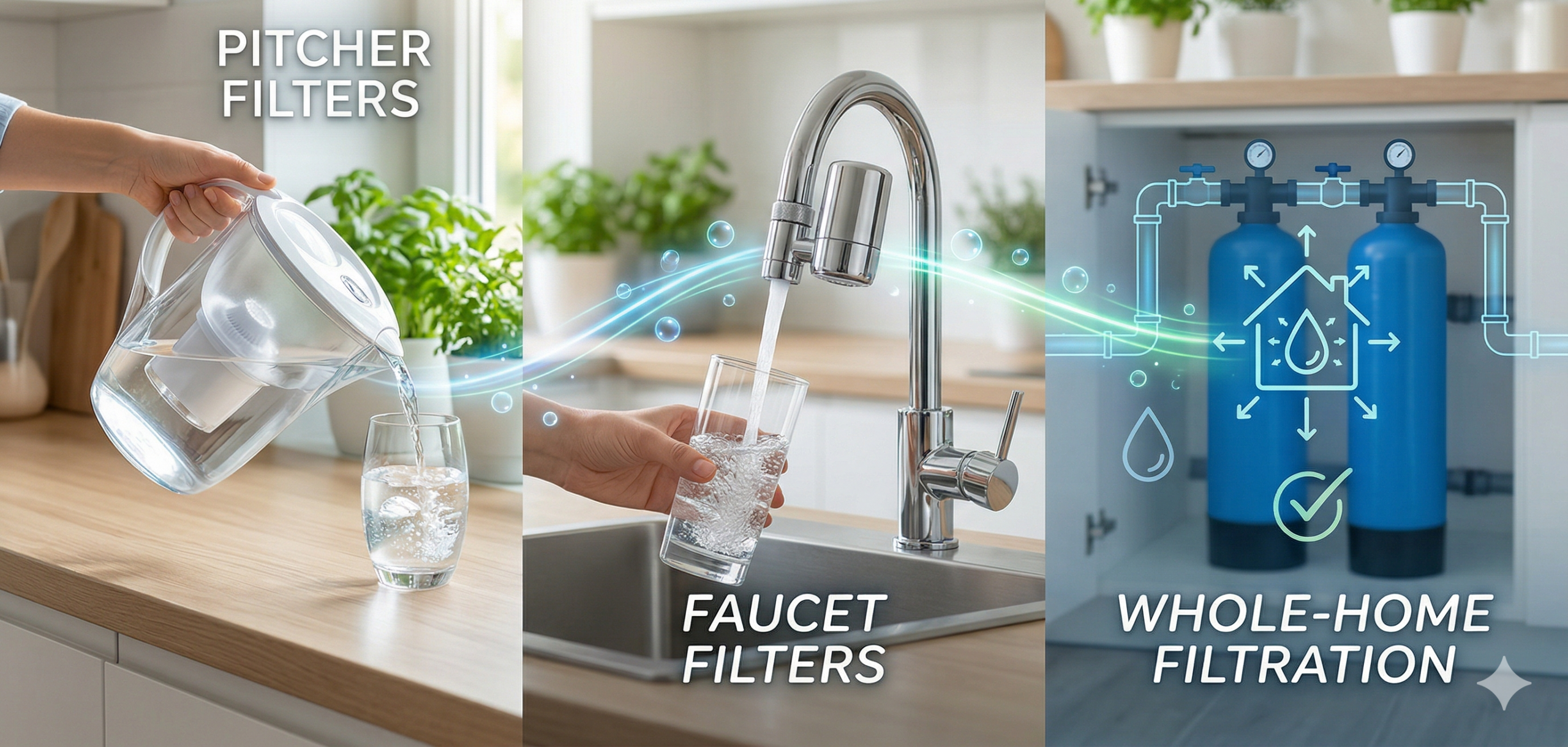
Point-of-use filters treat water at a single location, such as a pitcher or faucet. Whole-home filtration treats water as it enters the house, before it reaches any faucet, shower, or appliance.
That difference alone has a major impact on how much protection each option provides.
Pitcher Filters: A Common Starting Point
How Pitcher Filters Work
Pitcher filters rely on gravity to pass water through a replaceable filter cartridge. They are typically stored in the refrigerator and used exclusively for drinking water.
They are designed primarily to:
- Improve taste and odor
- Reduce chlorine
- Filter small volumes of water
Pitcher filters are often the first step homeowners take when water quality becomes a concern.
Why Homeowners Choose Pitcher Filters
Pitcher filters remain popular because they are:
- Inexpensive upfront
- Easy to find and replace
- Portable and renter-friendly
- Simple to use
For households focused only on drinking water taste, they can provide a noticeable improvement.
Where Pitcher Filters Fall Short
While convenient, pitcher filters have significant limitations that homeowners often discover over time.
Common drawbacks include:
- Limited filtration capacity
- Frequent cartridge replacements
- Slow filtration speed
- No protection for cooking water, bathing, or appliances
Pitcher filters also do nothing to protect plumbing systems, water heaters, or fixtures from mineral buildup and sediment.
Faucet-Mounted Filters: Improved Convenience, Limited Reach
How Faucet Filters Work
Faucet-mounted filters attach directly to a kitchen faucet and filter water as it flows. Many models allow users to switch between filtered and unfiltered water.
These filters are typically used for:
- Drinking water
- Cooking water
- Food preparation
They provide faster access to filtered water than pitcher systems.
Benefits of Faucet Filters
Faucet filters offer several advantages over pitcher filters:
- Immediate filtration without waiting
- Higher flow rates
- Greater convenience for cooking
- Less reliance on refrigerator space
For many households, this feels like a meaningful upgrade.
Limitations of Faucet-Mounted Filters
Despite their convenience, faucet filters still leave large gaps in protection.
Common limitations include:
- Filtering water at only one sink
- Reduced water pressure over time
- Frequent filter changes
- Compatibility issues with certain faucets
Like pitcher filters, faucet filters provide no protection for showers, laundry, or appliances.
Whole-Home Filtration: Treating Water at the Source
How Whole-Home Filtration Systems Work
Whole-home filtration systems are installed where water enters the house. All water flowing to faucets, showers, toilets, and appliances is filtered before it reaches living spaces.
Systems are tailored to water quality needs and may include:
- Sediment filtration
- Carbon filtration for chlorine and chemicals
- Specialized media for iron, sulfur, or other contaminants
This approach addresses water quality comprehensively rather than selectively.
Why Whole-Home Filtration Offers Broader Protection
Because all water entering the home is treated, whole-home filtration:
- Improves water quality at every tap
- Protects plumbing systems and appliances
- Improves bathing and showering comfort
- Reduces long-term maintenance issues
Homeowners often notice benefits throughout the house, not just in the kitchen.
Water Quality Is About More Than Drinking Water
Water quality affects daily routines in ways many homeowners don’t initially consider.
Unfiltered water can:
- Dry out skin and hair during showers
- Leave residue on dishes and glassware
- Cause laundry to feel stiff or faded
- Increase soap and detergent usage
Filtering water throughout the home improves comfort and efficiency in ways point-of-use filters cannot.
How Filtration Protects Plumbing and Appliances
Plumbing systems and appliances are exposed to water constantly. Sediment, minerals, and chemicals accelerate wear and reduce efficiency.
Whole-home filtration helps protect:
- Water heaters from scale buildup
- Washing machines and dishwashers
- Faucets, valves, and fixtures
- Pipes vulnerable to corrosion
This protection can significantly extend equipment lifespan and reduce repair costs.
Municipal Water Homes vs. Well Water Homes
Municipal Water Considerations
Homes on municipal water often benefit from filtration that:
- Reduces chlorine taste and odor
- Captures sediment from aging pipes
- Improves overall water clarity
While municipal water is treated, it is not optimized for taste or in-home plumbing protection.
Well Water Considerations
Well water presents different challenges and often requires more specialized treatment.
Common well water issues include:
- Iron and manganese staining
- Sulfur odors
- Hard water minerals
- Bacteria or sediment
Whole-home systems are often the most effective option for addressing these concerns consistently.
Maintenance and Long-Term Costs: What Homeowners Should Expect
Pitcher and faucet filters require frequent cartridge replacements, which can add up over time. Missed changes reduce effectiveness quickly.
Whole-home systems:
- Require less frequent maintenance
- Use larger, longer-lasting filters
- Provide consistent performance
Over the long term, many homeowners find whole-home filtration more cost-effective despite higher upfront costs.
Common Misconceptions About Water Filtration
“Filtered drinking water is enough.”
Bathing, laundry, and appliances are also affected by water quality.
“All filters remove the same contaminants.”
Different problems require different filtration methods.
“Whole-home systems are complicated.”
Modern systems are designed for reliability and ease of use.
Understanding these misconceptions helps homeowners avoid ineffective solutions.
How Professional Evaluation Makes a Difference
Water quality issues are highly specific to each home. Proper testing and evaluation ensure the right solution is installed.
Professional service helps:
- Identify specific contaminants
- Select appropriate filtration media
- Ensure proper sizing and installation
- Protect plumbing systems
This prevents wasted money on mismatched or ineffective products.
Choosing the Right Filtration Level for Your Home
The best filtration choice depends on:
- Water source
- Household size
- Plumbing system age
- Health and comfort priorities
Some homeowners start with point-of-use filters and later upgrade to whole-home systems as needs become clearer.
Building Long-Term Confidence in Your Home’s Water
Clean water should support every part of your home — from drinking and cooking to bathing and protecting your plumbing. While pitcher and faucet filters offer limited benefits, whole-home filtration provides consistent, comprehensive protection.
Choosing the right solution ensures better water quality, reduced maintenance, and greater peace of mind.
If you’re ready to improve water quality throughout your Rhode Island or Southern Massachusetts home, schedule your appointment with Superior Comfort for expert plumbing guidance you can trust.
Superior Comfort Specials
What Our Customers Say About Us
Anthony Brooks and Paul were amazing! They did everything in their power to be fair and give me what I wanted. Great customer service and would recommend.
Show More
Wilson Perez Jr
Very easy to work with. Doug was timely and thorough which I appreciated very much
Show More
Rosanna Thacke
David was wonderful.
Show More
Sandra Johnson
Technician was, really friendly and knowledgeable. Great experience.
Show More
RJ Wood
Thank you, Bill for your professionalism and time today as we continue to navigate our issues and decisions moving forward. I appreciate your patience and time listening to our concerns and questions. Keep up the great work.
Show More
John Ryan
We were having a problem with our air conditioner and we reached out this morning and the repair was completed by this afternoon. Our service tech Alex was so very helpful explaining exactly what was wrong and getting the repair done.
Show More
Dianna Lotito
Very professional and personable! Explained what he was doing very clearly!
Show More
John Lawlor
Patrick was timely and efficient. He explained what issues he saw with pictures and options for taking care of them. He got right to work on cleaning the condensers for us. It was a bit pricey compared to other states, but Superior had the best service contract in the area with the fastest service.
Show More
Rachel Mundell
Patrick, our technician, was polite, punctual and professional. He was quick to diagnose the problem and was able to return the same day with the necessary parts to fix our air conditioning. He did an excellent job!
Show More
Linda D
We had a great experience with Gerkin Bibieca from superior comfory today. He was prompt, professional, and friendly, answered all our questions, explained everything clearly, and provided a detailed quote without any pressure. We signed up for the membership because it offered great value. After another HVAC company rescheduled and failed to show up, it was a relief to work with someone reliable, knowledgeable, and efficient. We were very impressed and highly recommend him and superior comfort!
Show More
Meredith Weiss
Mike was extremely professional and patient with all my questions. He thoroughly explained all my options and fixed my issues promptly.
Show More
Kaxxxie
This is our first time using this company. They are professional company with great communication. The technician Gerkin was courteous and knowledgeable. We will be using their services again!
Show More
Donna Lapointe
Patrick was professional and courteous.
Show More
laurent bissonnette
Quick service. Very good service technician. Giovanni would be again welcomed in our home. Very thorough inspection of our HVAC.
Show More
Ralph Manzi
Kyle’s thorough attention to detail and exceptional workmanship are truly appreciated. His hard work, professionalism, and dedication to ensuring customer satisfaction are outstanding. He goes above and beyond to deliver quality results, making the entire experience smooth and reassuring. It’s clear he takes great pride in his work, and it shows in every aspect of the job. Highly recommended!
Show More
stacey aubin

FLEXIBLE FINANCING OPTIONS
Get the comfort you need without the upfront cost. We offer easy and affordable payment plans to fit your budget.