
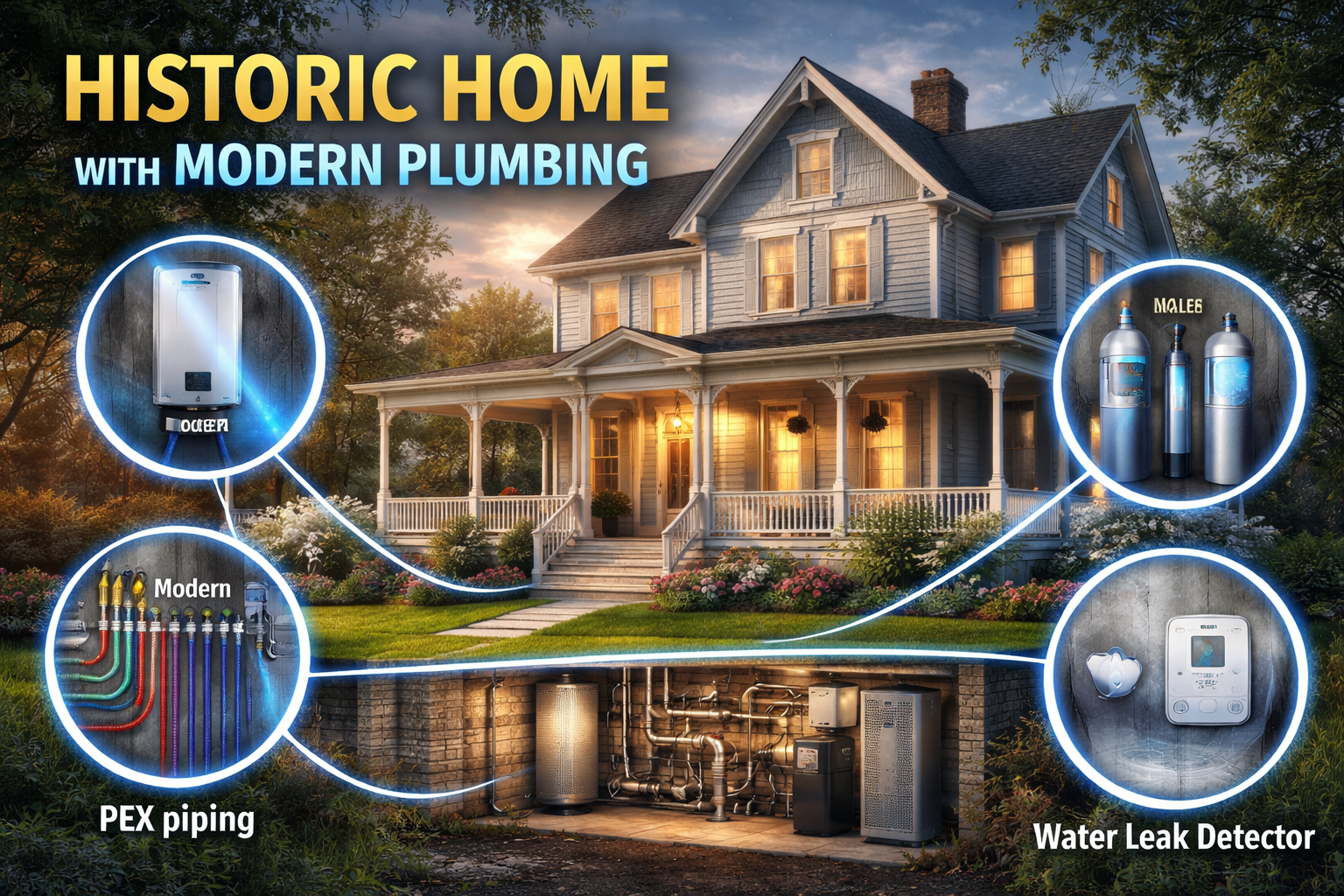
Historic homes are a source of pride across Rhode Island and Southern Massachusetts. From classic colonials in Bristol to Victorian-era homes in Warren and coastal properties in Barrington and Portsmouth, these houses tell stories that newer construction simply can’t replicate. Original woodwork, plaster walls, unique layouts, and handcrafted details give historic homes their unmistakable character.
At the same time, many historic homeowners face the same challenge: How do you improve comfort without compromising what makes the home special? Drafty rooms, uneven temperatures, outdated systems, and limited insulation can make living in a historic home less comfortable than it should be — especially in New England’s demanding climate.
Superior Comfort works with homeowners throughout Rhode Island to modernize comfort systems while preserving architectural integrity. With the right approach, it’s possible to enjoy reliable heating, cooling, plumbing, and electrical performance without stripping a home of its charm. Here’s what historic homeowners should know.
Why Comfort Is Often a Challenge in Historic Homes
Most historic homes were built long before modern HVAC systems, indoor plumbing standards, or electrical codes existed. Comfort wasn’t engineered the way it is today — homes relied on fireplaces, radiators, and natural ventilation.
Common comfort challenges include:
- Limited or nonexistent ductwork
- Drafty windows and doors
- Inconsistent room temperatures
- Minimal insulation in walls and attics
- Aging plumbing and electrical systems
These issues are compounded by New England winters, humid summers, and coastal conditions.
The Importance of a Preservation-Minded Approach
Historic homes require a different mindset than newer construction. Quick fixes that work in modern homes can damage or diminish historic features if applied without care.
A preservation-minded approach focuses on:
- Minimizing visible changes
- Avoiding unnecessary structural alterations
- Respecting original materials and layouts
- Improving comfort incrementally and thoughtfully
The goal isn’t to make a historic home feel brand new — it’s to make it livable, efficient, and comfortable while honoring its history.
Heating Solutions That Respect Historic Architecture
Boilers and Hydronic Heating Systems
Many historic homes already use boilers and radiators. When properly maintained or upgraded, hydronic systems can deliver excellent comfort.
Benefits include:
- Even, radiant-style heat
- Quiet operation
- Minimal visual impact
Upgrading boilers to modern high-efficiency models can dramatically improve performance without altering interior spaces.
Ductless Mini-Split Heat Pumps
Ductless mini-split systems are one of the most popular comfort upgrades for historic homes because they require minimal disruption.
They offer:
- Heating and cooling in one system
- Small wall penetrations instead of large ducts
- Zoned temperature control
When thoughtfully placed, indoor units can blend into rooms without overwhelming original details.
Hybrid Heating Approaches
Some historic homes benefit from hybrid systems that combine old and new technologies. For example:
- Existing radiators provide base heat
- Ductless systems handle supplemental heating and cooling
This approach preserves historic infrastructure while adding modern comfort.
Cooling Historic Homes Without Major Renovation
Air conditioning is often the biggest challenge in historic homes, especially those never designed for ductwork.
Options include:
- Ductless mini-splits
- High-velocity HVAC systems with small ducts
- Window or through-wall solutions (used selectively)
High-velocity systems are sometimes chosen for homes where discreet vents are preferred, but ductless systems are often less invasive and easier to integrate.
Managing Drafts Without Replacing Historic Windows
Original windows are a defining feature of historic homes — and one of the biggest sources of drafts. Replacing them isn’t always desirable or permitted.
Alternative solutions include:
- Weatherstripping and sealing
- Interior storm windows
- Targeted air sealing around frames
These improvements reduce drafts while preserving original craftsmanship.
Insulation Strategies That Protect Historic Materials
Insulation upgrades must be approached carefully in historic homes. Improper insulation can trap moisture and damage original materials.
Safe insulation strategies often include:
- Attic insulation improvements
- Basement and crawl space insulation
- Targeted air sealing
Wall insulation may be possible in some cases, but only after careful evaluation of moisture movement and ventilation.
Electrical Upgrades Hidden Behind the Scenes
Many historic homes still rely on outdated electrical systems that weren’t designed for modern appliances, HVAC equipment, or lighting.
Electrical upgrades may include:
- Panel replacements
- Additional circuits
- Updated wiring for safety
When done properly, these upgrades are largely invisible and dramatically improve safety and functionality.
Plumbing Improvements Without Tearing Up the House
Historic plumbing systems often include aging pipes, outdated fixtures, or inefficient layouts.
Thoughtful plumbing upgrades focus on:
- Replacing failing pipes section by section
- Improving water pressure and reliability
- Preserving visible fixtures when possible
Water quality improvements, such as filtration or pressure regulation, can often be added with minimal disruption.
Zoning and Room-by-Room Comfort Control
Historic homes rarely heat or cool evenly due to varied room sizes and layouts. Zoning solutions help tailor comfort without major construction.
Zoning options include:
- Ductless systems with individual room control
- Zoned hydronic systems
- Smart thermostats designed for older systems
Room-by-room control reduces energy waste and improves comfort.
Moisture and Humidity Control in Older Homes
Moisture is a common issue in historic homes, especially near the coast. Basements, crawl spaces, and thick masonry walls can trap dampness.
Humidity control strategies include:
- Whole-home dehumidifiers
- Improved ventilation
- Targeted drainage solutions
Managing moisture protects both comfort and historic materials.
Energy Efficiency Without Over-Modernizing
Efficiency upgrades don’t have to erase a home’s character. Small, strategic improvements can add up.
Examples include:
- High-efficiency boilers or heat pumps
- Improved insulation where appropriate
- Air sealing and draft reduction
The focus should be on smart efficiency, not aggressive overhauls.
Working Within Historic District Guidelines
Many Rhode Island homes fall within historic districts or preservation zones. Exterior changes may require approval.
Comfort upgrades that often align well with guidelines include:
- Interior HVAC improvements
- Electrical and plumbing upgrades
- Discreet outdoor equipment placement
Understanding local requirements early helps avoid delays.
Common Mistakes Historic Homeowners Make
Avoiding these pitfalls protects both comfort and character:
- Installing oversized or visually intrusive systems
- Ignoring moisture management
- Using contractors unfamiliar with historic construction
- Prioritizing speed over craftsmanship
Experience matters when working on historic homes.
Why Experience With Historic Homes Matters
Historic homes require specialized knowledge. Materials behave differently, access is limited, and mistakes can be costly.
Professionals experienced with historic properties understand:
- How to minimize disruption
- Where modern systems can be hidden
- How to balance preservation and performance
This expertise makes the difference between a thoughtful upgrade and a regrettable one.
Frequently Asked Questions About Comfort Upgrades in Historic Homes
Can historic homes be energy efficient?
Yes, with targeted improvements and proper planning.
Do modern systems damage old homes?
Not when installed by experienced professionals.
Is it possible to add AC without ducts?
Yes. Ductless and high-velocity systems are designed for this.
Preserving the Past While Living Comfortably Today
Historic homes were built to last, but they weren’t built for modern comfort expectations. With careful planning, it’s possible to improve heating, cooling, plumbing, and electrical performance without sacrificing the details that make these homes special.
Comfort and preservation don’t have to be opposing goals. When upgrades are designed with respect for the home’s history, homeowners can enjoy the best of both worlds — character and comfort.
If you want to improve comfort in your historic Rhode Island home without losing its charm, schedule your appointment with Superior Comfort for expert guidance you can trust.
Superior Comfort Specials
What Our Customers Say About Us
I called Superior for a leak. Mark showed up on time and wore the shoe covers. Mark was exceptional and professional and I am very grateful for his professionalism and work ethic. He had to dig to find the leak and he got wet in the process and acted like it was nothing. * One thing I am not a fan of is the AI customer service. That is no knock on Mark whatsoever. I just hate it when I call and I realize there will be no human. I would use Superior again and hope Mark is the contractor who shows up to do the work. Thank you.
Show More
Robert Stewart
These young men were kind ca and made me feel like they cared. Woul highly recommend this company.
Show More
mary scipione
Great customer service!!!! William explained all the work as he performed it and worked to get the job done in a timely manner. We are grateful that he was able to come within hours of calling for help from Superior Comfort. A hard worker and a very personable individual, thanks William!
Show More
Rich Coe Newport
I’m very happy with the price I paid and the service I received. Keegan did an excellent job servicing my furnace. I’m very happy with my decision to call you guys. I’m Looking forward to having my old furnace replaced in the next couple of days.
Show More
John O'Dell
Had Gee from superior comfort to work on my furnace and he did a really great job. Very nice guy. Would recommend this service.
Show More
Henara Yan
I had the pleasure of working with Gee today. He was so personable, knowledgeable, quick and efficient. It was a very positive experience. I will definitely be using Superior Comfort’s services again and asking for Gee.
Show More
Kristin Tanasio
Tech came quickly and identified the issue and solved it quickly
Show More
Karen Cordeiro
Very professional. He knows what he is doing. Will use them again.
Show More
Laurie Keenan
I called superior for the first time and Bryce Weaver and Justin came to my home to evaluated an issue with my tub! Bryce was excellent he gave me a quote to replace my damaged tub and shower but he gave me options. He was pushy he just was very thorough and he let me decide without pressure! We would definitely recommend him and the Company!
Show More
Deb Spencer
Outstanding service!!!
Show More
vicky wiseman
William Putnam was really on point, laid everything out as simple as he could and was a pleasure to work with.
Show More
Francisco Rodriguez
Great service, very good guy, friendly, professional and knowledgeable!
Show More
Patti Patterson
Austin and Charles were amazing! Recommend to anyone
Show More
Mollie Diesing
Patrick was excellent. He is very knowledgeable and kind.
Show More
Jill Jeter
Austin (Plumber) and Anthony (Electrician) did a great job installing my sump pump and the dedicated GFI outlet. They were incredibly friendly and easy to work with. The communication throughout the entire project was great. They were both beyond responsive with getting out to the house to evaluate the site and getting the job started. Really appreciate all the help guys! Happy to join the Superior team for all of our HVAC, Plumbing and Electrical needs going forward!
Show More
Ryan MacKenzie
FLEXIBLE FINANCING OPTIONS
Get the comfort you need without the upfront cost. We offer easy and affordable payment plans to fit your budget.