
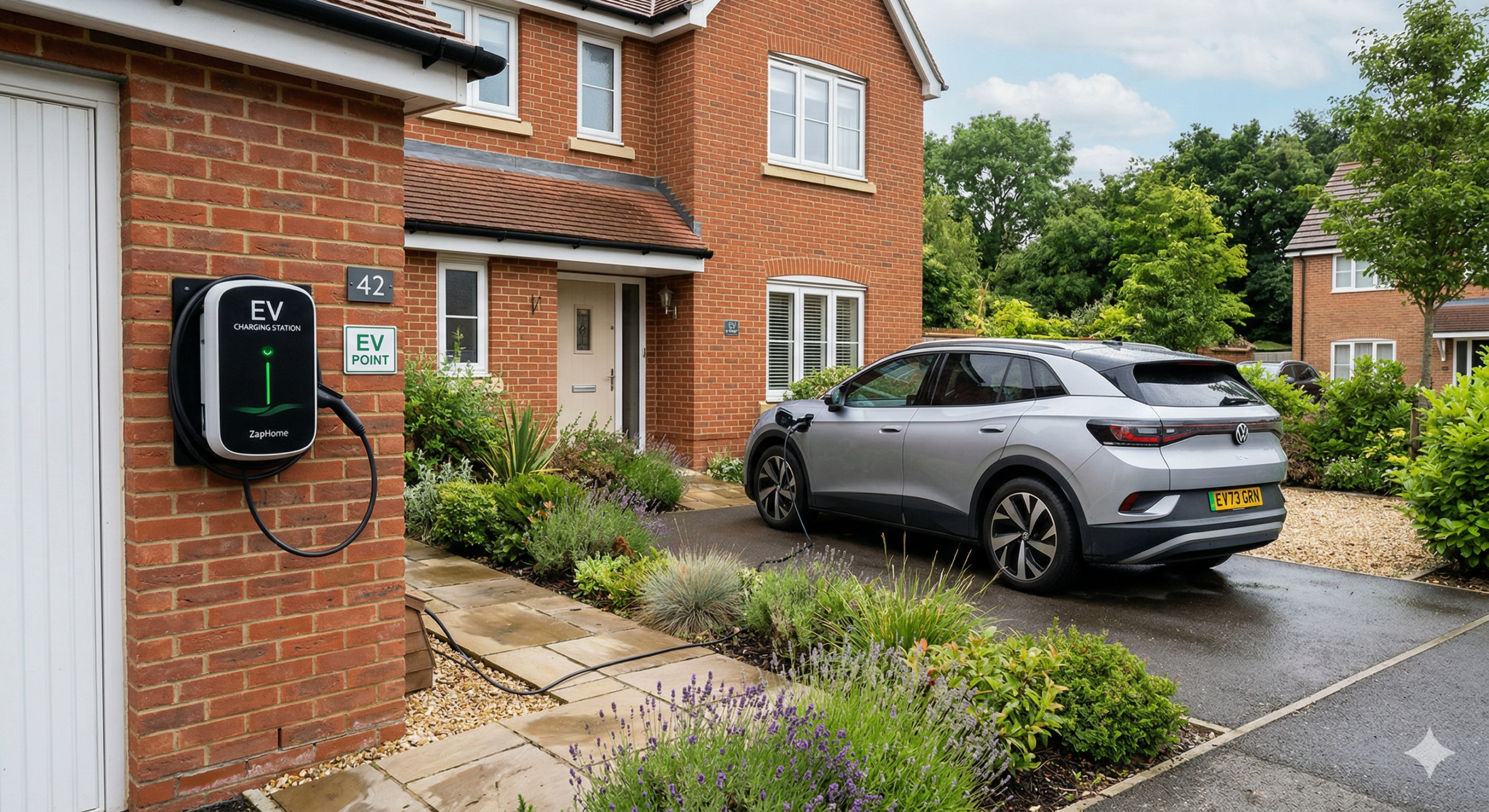
Electric vehicles are no longer a future trend — they are already a common sight on roads across Rhode Island and Southern Massachusetts. As more homeowners make the switch to EVs, one question comes up almost immediately after purchase: How do I charge this vehicle at home safely and efficiently?
While public charging stations continue to expand, most EV owners quickly discover that home charging is where the real convenience lies. Charging overnight, avoiding lines, and starting each day with a full battery changes how an EV fits into daily life. However, installing a home charging station involves more than buying a charger and plugging it in. Electrical capacity, panel readiness, parking layout, and charging speed all play a critical role in how well the system works.
Superior Comfort helps homeowners throughout Bristol, Warren, Barrington, Portsmouth, Tiverton, and the greater Rhode Island area install EV charging solutions that are safe, reliable, and designed for real homes — not just ideal scenarios. Here’s what homeowners should understand before installing an EV charging station at home.
Why Home EV Charging Has Become the Preferred Option
Public charging stations are useful, but they’re rarely as convenient as homeowners expect. Availability, charging speed, and location all vary, and relying solely on public infrastructure can quickly become frustrating.
Home EV charging allows homeowners to:
- Charge during overnight, off-peak hours
- Avoid waiting for public chargers
- Eliminate “range anxiety”
- Control charging costs more predictably
For many households, charging at home becomes as routine as plugging in a phone before bed.
Understanding EV Charging Levels and What They Mean for Your Home
Not all EV charging is the same. Understanding charging levels helps homeowners set realistic expectations and avoid unnecessary upgrades.
Level 1 Charging: Basic but Limited
Level 1 charging uses a standard 120-volt household outlet. Most EVs include a Level 1 charging cable.
This option:
- Requires no electrical upgrades
- Adds only a few miles of range per hour
- Works best for very short daily commutes
For many Rhode Island homeowners, Level 1 charging quickly proves too slow — especially in winter when batteries charge less efficiently.
Level 2 Charging: The Homeowner Standard
Level 2 charging uses a 240-volt circuit, similar to electric dryers or ranges.
Level 2 chargers:
- Add significantly more range per hour
- Fully recharge most EVs overnight
- Offer consistent, predictable performance
This is the most common and practical choice for homeowners who rely on their EV daily.
Electrical Panel Capacity: The Most Important Starting Point
Before choosing a charger, the home’s electrical panel must be evaluated. Many Rhode Island homes — particularly older ones — were never designed to handle modern electrical demand.
An electrical panel evaluation considers:
- Total amperage rating
- Available breaker space
- Existing high-demand appliances
- Overall household electrical usage
Homes with 100-amp panels often require upgrades, while many 200-amp panels can support EV charging with proper load planning.
When an Electrical Panel Upgrade Becomes Necessary
A panel upgrade may be required if:
- The panel is already near capacity
- Breaker slots are full
- The panel uses outdated or unsafe components
- Additional electrical upgrades are planned
While panel upgrades add upfront cost, they also improve safety and future-proof the home for additional technology.
Dedicated Circuits and Electrical Safety Requirements
EV chargers must always be installed on dedicated circuits. This ensures consistent power delivery and prevents interference with other systems.
Proper installation includes:
- Correct breaker sizing
- Appropriate wire gauge
- Grounding and bonding
- Code-compliant connections
Because EV chargers draw high current for extended periods, professional installation is essential to prevent overheating and fire hazards.
Parking Location and Charger Placement: Planning Matters
Where your EV is parked directly affects installation complexity and cost.
Key placement considerations include:
- Garage vs. driveway charging
- Distance from the electrical panel
- Wall-mounted vs. pedestal-mounted chargers
- Vehicle charging port location
Garages typically offer simpler installations, but outdoor-rated chargers work well when properly installed for coastal conditions.
Outdoor Charging in Coastal New England
Outdoor installations in Rhode Island and Southern Massachusetts require extra care due to:
- Salt air exposure
- Wind-driven rain
- Temperature fluctuations
Chargers must be rated for outdoor use, securely mounted, and protected against corrosion to ensure long-term reliability.
Charging Speed: What Homeowners Should Realistically Expect
Charging speed depends on more than just the charger itself.
Key factors include:
- Charger amperage
- Vehicle onboard charging limits
- Electrical circuit capacity
Installing the fastest charger available doesn’t always result in faster charging if the vehicle can’t accept the additional power.
A professional evaluation ensures:
- Charger selection matches the vehicle
- Electrical capacity is used efficiently
- Charging expectations align with real-world results
Load Management and Smart Charging Technology
Many modern EV chargers include load management features that automatically adjust charging based on household electrical usage.
These systems:
- Prevent panel overload
- Reduce the need for panel upgrades in some homes
- Allow EV charging alongside other high-demand appliances
Smart charging is especially helpful in homes with limited electrical capacity.
EV Charging in Older Rhode Island Homes
Older homes present unique challenges, including:
- Smaller electrical panels
- Older wiring
- Limited installation pathways
That doesn’t mean EV charging isn’t possible. It simply means careful planning and professional design are required.
In many cases, targeted upgrades allow EV charging without major disruption.
Permits, Inspections, and Code Compliance
EV charger installations typically require permits and inspections.
Professional installation ensures:
- Local electrical codes are followed
- Utility requirements are met
- Insurance coverage remains valid
Skipping this step can create serious issues during home sales or insurance claims.
Understanding Energy Use and Utility Costs
Homeowners often worry about increased electric bills. While EV charging does increase electricity use, many find:
- Charging costs less than gasoline
- Off-peak charging reduces expenses
- Monthly costs are predictable
Understanding charging habits helps homeowners manage energy use effectively.
EV Charging and Home Resale Value
As EV adoption increases, homes equipped for EV charging become more attractive to buyers.
Future-ready benefits include:
- Increased market appeal
- Reduced installation costs for future owners
- Electrical capacity for additional upgrades
EV readiness is becoming a valuable home feature rather than a niche upgrade.
Common Mistakes Homeowners Make With EV Charging
Avoiding these mistakes saves time and money:
- Assuming the panel can handle the load
- Choosing chargers without professional input
- Ignoring future electrical needs
- Installing chargers in inconvenient locations
Planning ahead ensures the system works for years to come.
Why Professional Electrical Installation Is Essential
EV chargers place sustained demand on a home’s electrical system. Improper installation can result in:
- Fire risks
- Equipment damage
- Charging interruptions
Professional installation ensures safety, reliability, and long-term performance.
Frequently Asked Questions About Home EV Charging
Can I install an EV charger myself?
EV chargers should always be installed by licensed electricians.
Do I need the highest-powered charger available?
Not necessarily — the right charger depends on your vehicle and usage.
Are incentives available?
Some programs exist, and a professional can help identify eligibility.
Charging at Home With Confidence
Installing an EV charging station at home is a smart investment in convenience and future readiness. When electrical capacity, parking layout, and charging speed are properly planned, homeowners can enjoy reliable, safe charging without disruption.
Treating EV charging as a whole-home electrical upgrade — rather than a quick add-on — ensures long-term satisfaction and peace of mind.
If you’re planning to install an EV charging station at your Rhode Island or Southern Massachusetts home, schedule your appointment with Superior Comfort for expert electrical guidance you can trust.
Superior Comfort Specials
What Our Customers Say About Us
These young men were kind ca and made me feel like they cared. Woul highly recommend this company.
Show More
mary scipione
Great customer service!!!! William explained all the work as he performed it and worked to get the job done in a timely manner. We are grateful that he was able to come within hours of calling for help from Superior Comfort. A hard worker and a very personable individual, thanks William!
Show More
Rich Coe Newport
I’m very happy with the price I paid and the service I received. Keegan did an excellent job servicing my furnace. I’m very happy with my decision to call you guys. I’m Looking forward to having my old furnace replaced in the next couple of days.
Show More
John O'Dell
Had Gee from superior comfort to work on my furnace and he did a really great job. Very nice guy. Would recommend this service.
Show More
Henara Yan
I had the pleasure of working with Gee today. He was so personable, knowledgeable, quick and efficient. It was a very positive experience. I will definitely be using Superior Comfort’s services again and asking for Gee.
Show More
Kristin Tanasio
Tech came quickly and identified the issue and solved it quickly
Show More
Karen Cordeiro
Very professional. He knows what he is doing. Will use them again.
Show More
Laurie Keenan
I called superior for the first time and Bryce Weaver and Justin came to my home to evaluated an issue with my tub! Bryce was excellent he gave me a quote to replace my damaged tub and shower but he gave me options. He was pushy he just was very thorough and he let me decide without pressure! We would definitely recommend him and the Company!
Show More
Deb Spencer
Outstanding service!!!
Show More
vicky wiseman
William Putnam was really on point, laid everything out as simple as he could and was a pleasure to work with.
Show More
Francisco Rodriguez
Great service, very good guy, friendly, professional and knowledgeable!
Show More
Patti Patterson
Austin and Charles were amazing! Recommend to anyone
Show More
Mollie Diesing
Patrick was excellent. He is very knowledgeable and kind.
Show More
Jill Jeter
Austin (Plumber) and Anthony (Electrician) did a great job installing my sump pump and the dedicated GFI outlet. They were incredibly friendly and easy to work with. The communication throughout the entire project was great. They were both beyond responsive with getting out to the house to evaluate the site and getting the job started. Really appreciate all the help guys! Happy to join the Superior team for all of our HVAC, Plumbing and Electrical needs going forward!
Show More
Ryan MacKenzie
The best in the business!
Show More
Will Schenerlein

FLEXIBLE FINANCING OPTIONS
Get the comfort you need without the upfront cost. We offer easy and affordable payment plans to fit your budget.