
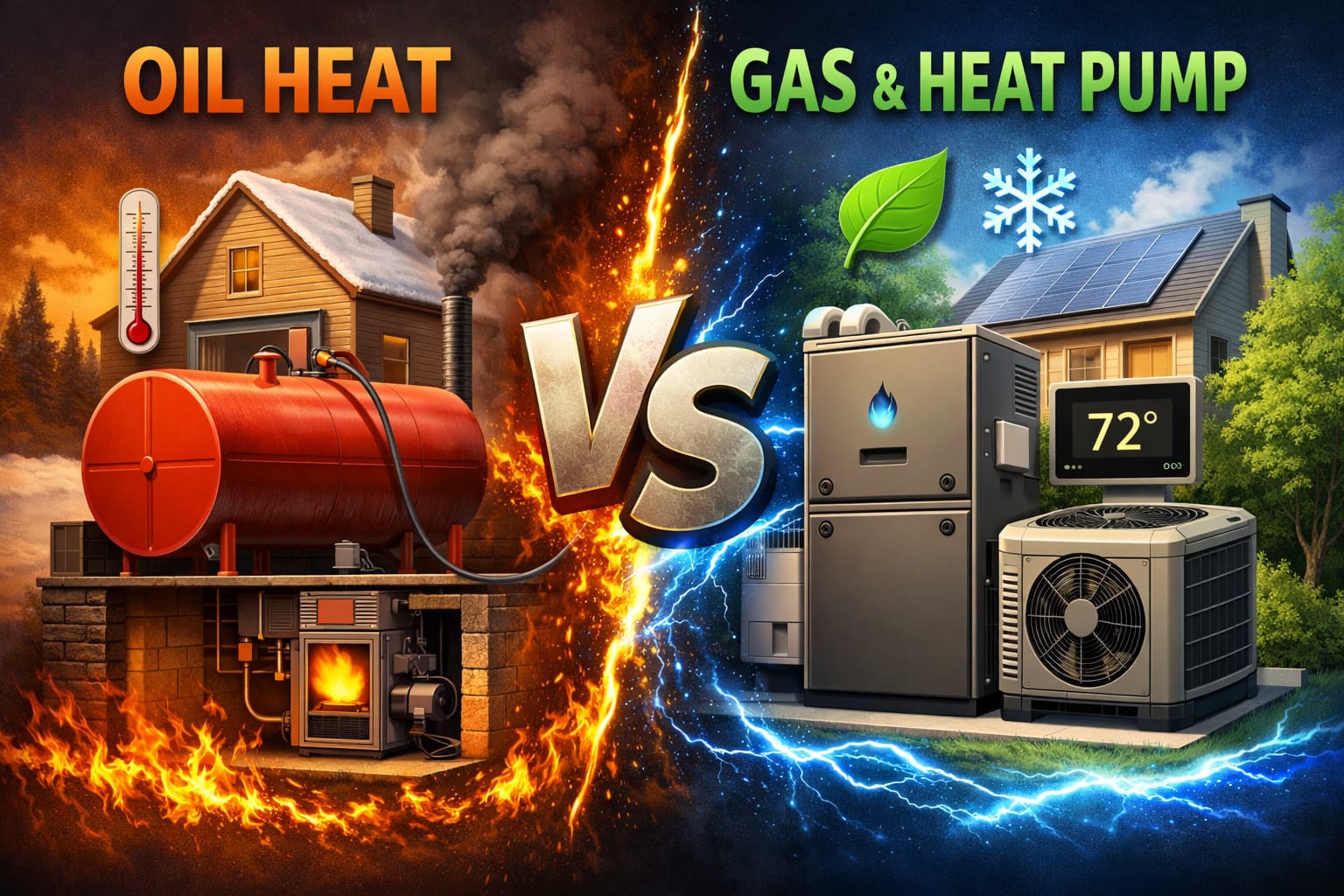
Oil heat has been a staple in Rhode Island and Southern Massachusetts homes for decades. Many older houses in Bristol, Warren, Barrington, Portsmouth, and surrounding coastal communities were built with oil-fired boilers or furnaces, and for years, that system simply felt like “the way things are done.” But in 2026, more homeowners are questioning whether oil heat still makes sense.
Our team of experts at Superior Comfort understands that rising fuel costs, aging equipment, environmental concerns, and the availability of modern alternatives have pushed many families to consider switching to high-efficiency gas systems or heat pumps. The decision isn’t just about replacing one system with another — it’s about comfort, long-term costs, reliability, and how your home will perform in New England’s coastal climate.
Superior Comfort helps homeowners across Rhode Island evaluate oil-to-gas and oil-to-heat-pump conversions with guidance and practical planning. This guide breaks down what homeowners should consider before making the switch..
Why More Coastal New England Homeowners Are Reconsidering Oil Heat
Oil systems can still function reliably, but many are reaching the end of their useful life. Boilers and furnaces installed 25 or 30 years ago are far less efficient than modern systems and often require frequent service.
Common reasons homeowners consider switching include:
- Rising and unpredictable oil prices
- Aging equipment with declining efficiency
- Uneven heating or slow response times
- Maintenance costs and fuel delivery logistics
- Desire for cleaner, more efficient options
In coastal areas, corrosion and moisture can also shorten the lifespan of oil tanks and components.
Understanding What Oil Heat Does Well — and Where It Falls Short
Oil heat produces strong, consistent warmth and has historically been effective in cold climates. Many homeowners appreciate the deep heat oil systems provide, especially during harsh winters.
However, oil systems also come with drawbacks:
- Lower efficiency compared to modern options
- Higher operating costs over time
- Regular fuel deliveries and storage requirements
- More intensive maintenance needs
As systems age, these disadvantages become more noticeable.
High-Efficiency Gas Heating: What Homeowners Should Know
How Modern Gas Systems Work
High-efficiency gas furnaces and boilers use advanced combustion and heat exchange technology to extract more usable heat from fuel. Many systems achieve efficiency ratings far higher than older oil equipment.
Gas heating systems can include:
- High-efficiency furnaces for forced-air homes
- Condensing boilers for hydronic systems
- Combination heating and hot water solutions
These systems are designed for reliable, consistent performance in New England winters.
Benefits of Switching From Oil to Gas
Homeowners who convert to gas often notice:
- Lower monthly heating costs
- Faster, more responsive heat
- Reduced maintenance requirements
- No need for fuel storage tanks
For homes already near gas service lines, conversion can be a straightforward upgrade.
Considerations and Limitations of Gas Conversions
Gas isn’t available everywhere, especially in some coastal or rural areas. Installation may require:
- Utility connection and permitting
- Removal or abandonment of oil tanks
- Changes to venting or piping
While gas is cleaner than oil, it’s still a fossil fuel, which matters to homeowners focused on long-term sustainability.
Heat Pumps: A Modern Alternative for Coastal New England Homes
How Heat Pumps Work
Heat pumps don’t create heat by burning fuel. Instead, they move heat from one place to another using electricity. In winter, they pull heat from outdoor air and bring it inside. In summer, they reverse the process to cool the home.
Modern cold-climate heat pumps are specifically designed to perform efficiently in temperatures common to Rhode Island and Southern Massachusetts.
Why Heat Pumps Are Gaining Popularity
Heat pumps offer several advantages over oil systems:
- Heating and cooling in one system
- Lower operating costs in many homes
- No on-site fuel storage
- Reduced carbon footprint
For coastal homes, the ability to provide consistent comfort without combustion is a major benefit.
Performance in New England Winters: A Common Concern
One of the biggest questions homeowners ask is whether heat pumps can handle cold winters. Today’s cold-climate systems are engineered to operate efficiently at temperatures well below freezing.
Homeowners report:
- Steady, even heat
- Fewer temperature swings
- Reliable performance through most winter conditions
Some homes use hybrid systems that pair heat pumps with existing boilers or backup heat for extreme cold days.
Comparing Comfort: Oil vs. Gas vs. Heat Pumps
Comfort isn’t just about temperature — it’s about consistency, airflow, and responsiveness.
Oil systems:
- Deliver strong heat but may cycle unevenly
- Can feel slower to respond
Gas systems:
- Heat spaces quickly
- Offer more consistent performance
Heat pumps:
- Provide steady, even warmth
- Avoid dramatic temperature swings
Each option feels different, and homeowner preferences matter.
Operating Costs and Long-Term Savings
Upfront costs vary, but long-term expenses are often what drive decisions.
Oil heat:
- Subject to fuel price volatility
- Higher annual maintenance costs
Gas heat:
- Generally lower operating costs than oil
- Predictable billing
- Lower energy use overall
- Eligibility for rebates and incentives
- Reduced maintenance over time
Over the life of the system, efficiency gains can be significant.
Electrical and Infrastructure Considerations
Switching away from oil often requires electrical or infrastructure upgrades.
Heat pump installations may require:
- Electrical panel upgrades
- Dedicated circuits
Gas conversions may require:
- Gas line installation
- Updated venting
Coordinating heating and electrical work under one trusted provider simplifies the process.
What Happens to the Existing Oil Tank?
Oil tanks must be handled properly during conversions. Options may include:
- Removal
- Abandonment in place (when allowed)
- Environmental compliance steps
Proper handling protects homeowners from future issues and liability.
Hybrid Systems: A Middle-Ground Option
Some homeowners choose hybrid systems that combine a heat pump with a gas or oil backup. This approach:
- Maximizes efficiency most of the year
- Provides backup during extreme cold
- Allows gradual transition away from oil
Hybrid setups are especially common in older homes.
Environmental and Lifestyle Considerations
Many homeowners factor sustainability into their decision.
- Produce no on-site emissions
- Align with renewable energy goals
Gas systems:
- Cleaner than oil but still fossil-based
Lifestyle factors such as noise, maintenance, and future expansion plans also play a role.
Planning the Right Conversion for Your Home
There’s no universal answer to whether you should switch from oil to gas or heat pumps. The right choice depends on:
- Home size and layout
- Existing heating system
- Electrical capacity
- Budget and long-term goals
A professional evaluation ensures the system is properly sized and designed.
Common Myths About Switching From Oil Heat
“Oil is always cheaper in winter.”
Fuel prices fluctuate, and efficiency matters more than fuel type alone.
“Heat pumps can’t handle coastal winters.”
Modern cold-climate systems are designed for New England conditions.
“Switching systems is too disruptive.”
With proper planning, conversions can be completed smoothly.
Frequently Asked Questions About Oil-to-Alternative Conversions
Do I have to remove my oil system entirely?
Not always. Hybrid options may be available.
Will switching increase home value?
Modern, efficient systems are often attractive to buyers.
Are incentives available?
Many heat pump installations qualify for rebates.
Making a Confident Decision About Your Home’s Heating Future
Switching from oil heat is a major decision — but it’s also an opportunity to improve comfort, efficiency, and peace of mind. Whether gas or heat pumps make the most sense, the key is understanding how each option fits your home and lifestyle.
With the right planning and professional guidance, homeowners across coastal New England can transition away from oil with confidence and clarity.
If you’re considering switching from oil heat in your Rhode Island home, schedule your appointment with Superior Comfort for expert heating guidance you can trust. keep your home running smoothly, schedule your appointment with Superior Comfort for professional plumbing maintenance you can trust.
Superior Comfort Specials
What Our Customers Say About Us
I called Superior for a leak. Mark showed up on time and wore the shoe covers. Mark was exceptional and professional and I am very grateful for his professionalism and work ethic. He had to dig to find the leak and he got wet in the process and acted like it was nothing. * One thing I am not a fan of is the AI customer service. That is no knock on Mark whatsoever. I just hate it when I call and I realize there will be no human. I would use Superior again and hope Mark is the contractor who shows up to do the work. Thank you.
Show More
Robert Stewart
These young men were kind ca and made me feel like they cared. Woul highly recommend this company.
Show More
mary scipione
Great customer service!!!! William explained all the work as he performed it and worked to get the job done in a timely manner. We are grateful that he was able to come within hours of calling for help from Superior Comfort. A hard worker and a very personable individual, thanks William!
Show More
Rich Coe Newport
I’m very happy with the price I paid and the service I received. Keegan did an excellent job servicing my furnace. I’m very happy with my decision to call you guys. I’m Looking forward to having my old furnace replaced in the next couple of days.
Show More
John O'Dell
Had Gee from superior comfort to work on my furnace and he did a really great job. Very nice guy. Would recommend this service.
Show More
Henara Yan
I had the pleasure of working with Gee today. He was so personable, knowledgeable, quick and efficient. It was a very positive experience. I will definitely be using Superior Comfort’s services again and asking for Gee.
Show More
Kristin Tanasio
Tech came quickly and identified the issue and solved it quickly
Show More
Karen Cordeiro
Very professional. He knows what he is doing. Will use them again.
Show More
Laurie Keenan
I called superior for the first time and Bryce Weaver and Justin came to my home to evaluated an issue with my tub! Bryce was excellent he gave me a quote to replace my damaged tub and shower but he gave me options. He was pushy he just was very thorough and he let me decide without pressure! We would definitely recommend him and the Company!
Show More
Deb Spencer
Outstanding service!!!
Show More
vicky wiseman
William Putnam was really on point, laid everything out as simple as he could and was a pleasure to work with.
Show More
Francisco Rodriguez
Great service, very good guy, friendly, professional and knowledgeable!
Show More
Patti Patterson
Austin and Charles were amazing! Recommend to anyone
Show More
Mollie Diesing
Patrick was excellent. He is very knowledgeable and kind.
Show More
Jill Jeter
Austin (Plumber) and Anthony (Electrician) did a great job installing my sump pump and the dedicated GFI outlet. They were incredibly friendly and easy to work with. The communication throughout the entire project was great. They were both beyond responsive with getting out to the house to evaluate the site and getting the job started. Really appreciate all the help guys! Happy to join the Superior team for all of our HVAC, Plumbing and Electrical needs going forward!
Show More
Ryan MacKenzie

FLEXIBLE FINANCING OPTIONS
Get the comfort you need without the upfront cost. We offer easy and affordable payment plans to fit your budget.