
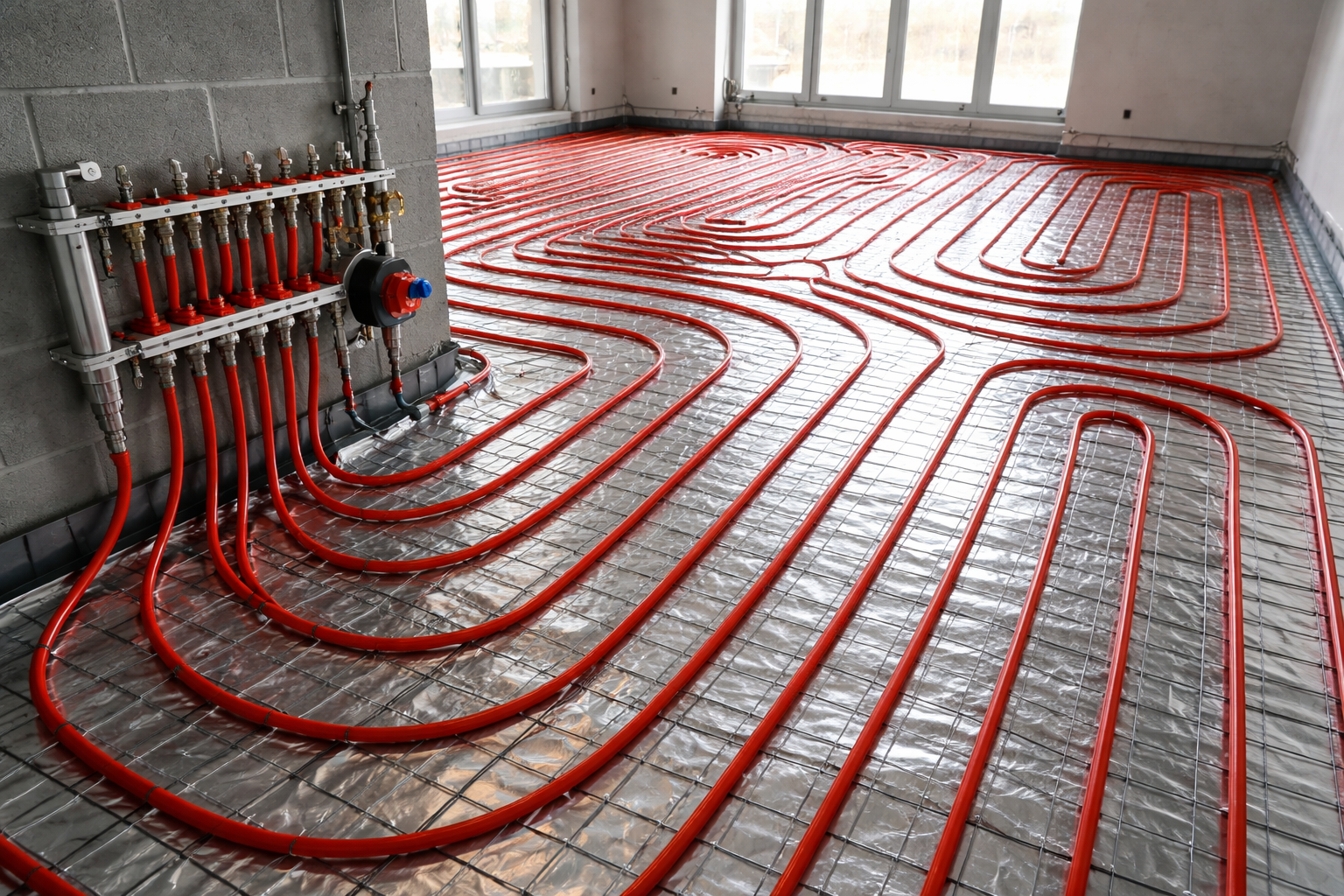
Few home upgrades feel as luxurious — and practical — as radiant floor heating. Stepping onto a warm bathroom floor on a winter morning or cooking in a kitchen without cold drafts at your feet can completely change how a space feels. That’s why radiant floor heating is increasingly popular among homeowners in Rhode Island and Southern Massachusetts, especially during bathroom and kitchen remodels.
Radiant floor heating isn’t just about comfort. When designed correctly, it can improve energy efficiency, eliminate cold spots, and integrate seamlessly into both modern and historic homes. However, it’s not a one-size-fits-all solution, and planning matters just as much as the system itself.
Superior Comfort works with homeowners throughout Bristol, Warren, Barrington, Portsmouth, Tiverton, and the surrounding region to design radiant heating systems that fit real homes and real remodeling plans. Here’s what you should know before deciding whether radiant floor heating is right for your bathroom or kitchen remodel.
What Is Radiant Floor Heating?
Radiant floor heating warms a room from the ground up. Instead of blowing hot air through vents or relying on baseboard heat, the system heats the floor surface itself, which then radiates warmth evenly throughout the space.
There are two main types of radiant floor heating:
- Electric radiant systems, which use heating cables or mats
- Hydronic (water-based) radiant systems, which circulate warm water through tubing
Both systems are installed beneath the finished floor and are completely hidden once the remodel is complete.
Why Bathrooms and Kitchens Are Ideal for Radiant Heating
Bathrooms and kitchens are the most common rooms for radiant floor heating, and for good reason.
These spaces often:
- Have tile or stone floors that feel cold in winter
- Are used frequently in the morning and evening
- Experience temperature swings due to plumbing and exterior walls
- Are already being renovated, making installation easier
Radiant heat solves comfort issues at the source — the floor — rather than trying to compensate with hotter air temperatures.
How Radiant Floor Heating Improves Comfort
Traditional heating systems warm the air first. Radiant floors warm surfaces and people directly. This difference changes how comfort feels in the room.
Homeowners often notice:
- Even warmth with no cold spots
- No drafts or blowing air
- Consistent temperatures from floor to ceiling
- Warmer-feeling rooms at lower thermostat settings
Because heat rises naturally, radiant floors create a balanced, comfortable environment without overheating.
Electric vs. Hydronic Radiant Floor Heating: The Basics
Electric Radiant Floor Heating
Electric systems use resistance cables or pre-formed mats installed beneath the flooring. They are typically controlled by a thermostat and heat up quickly.
Electric radiant heating is often best for:
- Small bathrooms
- Powder rooms
- Remodels where adding plumbing isn’t practical
These systems are relatively simple to install during a remodel and are often used as comfort upgrades rather than whole-room heat sources.
Hydronic Radiant Floor Heating
Hydronic systems circulate warm water through flexible tubing beneath the floor. The water is heated by a boiler, water heater, or heat pump.
Hydronic radiant heating is often chosen for:
- Larger kitchens
- Master bathrooms
- Whole-home or multi-room systems
While installation is more involved, hydronic systems are typically more efficient for larger areas.
Is Radiant Floor Heating a Primary Heat Source or Supplemental?
One of the most important planning questions is whether radiant floor heating will serve as the main heat source or simply add comfort.
In many bathroom remodels:
- Radiant floors are supplemental
- Existing heating systems still handle the main load
In some kitchens and open layouts:
- Radiant heat can contribute significantly to room heating
- System design must account for insulation, floor material, and square footage
Proper load calculations ensure expectations match performance.
Flooring Materials That Work Best With Radiant Heat
Not all flooring materials transfer heat equally. The floor finish plays a major role in how effective radiant heating feels.
Best options include:
- Tile and porcelain
- Stone
- Engineered hardwood (when approved)
- Luxury vinyl designed for radiant heat
Thick carpet or solid hardwood can reduce heat transfer and may limit system effectiveness.
Planning Radiant Heat Early in the Remodel Process
Radiant floor heating must be planned before flooring is installed. Waiting until late in the remodel often limits options or increases cost.
Early planning allows for:
- Proper system sizing
- Coordination with electrical or plumbing work
- Floor height and transition planning
- Efficient installation timelines
This is especially important in older Rhode Island homes where floor structure varies.
Electrical and Plumbing Considerations
Radiant floor systems require careful coordination with existing home infrastructure.
Electric systems may require:
- Dedicated electrical circuits
- Panel capacity evaluation
- Thermostat placement planning
Hydronic systems may require:
- Boiler or heat source integration
- Manifold placement
- Plumbing access and insulation
Having heating, plumbing, and electrical expertise under one roof simplifies the process and prevents delays.
Energy Efficiency and Operating Costs
Radiant floor heating is often perceived as expensive to operate, but efficiency depends on system type and usage.
Radiant systems are efficient because:
- Heat is delivered directly where needed
- Lower water or air temperatures are required
- Rooms stay comfortable longer
Bathrooms used for short periods can be heated only when needed, keeping energy use reasonable.
Radiant Floor Heating in Older and Historic Homes
Many Rhode Island homes were built long before radiant heating existed. That doesn’t mean radiant floors aren’t an option.
Considerations in older homes include:
- Floor framing and load capacity
- Insulation below the heated area
- Integration with existing boilers or heating systems
In some cases, radiant floors are added only in remodeled areas while existing systems heat the rest of the home.
Common Misconceptions About Radiant Floor Heating
“Radiant floors take too long to heat up.”
Modern systems respond faster than many homeowners expect, especially in smaller spaces.
“Radiant heating is only for luxury homes.”
It’s increasingly used in practical remodels where comfort matters most.
“It will raise my energy bills significantly.”
When designed properly, operating costs are often modest.
Understanding these misconceptions helps homeowners set realistic expectations.
Maintenance and Longevity of Radiant Floor Systems
Radiant floor systems are low-maintenance because they have few moving parts.
Electric systems:
- Require virtually no maintenance
- Have long service lives
Hydronic systems:
- Require periodic boiler maintenance
- Benefit from system checks during heating service
Once installed correctly, radiant floors are designed to last for decades.
When Radiant Floor Heating May Not Be the Best Choice
Radiant floor heating may not be ideal if:
- The remodel scope is very limited
- Flooring materials aren’t compatible
- Budget constraints are tight
- Structural changes aren’t feasible
A professional evaluation helps determine whether the benefits justify the investment.
Radiant Heat and Whole-Home Comfort Strategy
Radiant floor heating works best as part of a broader comfort plan. It pairs well with:
- Boilers and hydronic systems
- Heat pumps in certain applications
- Existing forced-air systems
The goal is to enhance comfort without overcomplicating the home’s heating setup.
Frequently Asked Questions About Radiant Floor Heating
Can radiant floors be added during a partial remodel?
Yes, as long as floor access and planning allow.
Is radiant heat safe for bathrooms?
Yes. Systems are designed for wet environments when installed properly.
Can radiant floors be zoned?
Yes. Many systems allow room-by-room control.
Designing Comfort Into Your Remodel From the Ground Up
Radiant floor heating can transform a bathroom or kitchen remodel from a simple update into a true comfort upgrade. When planned early and designed properly, it delivers warmth exactly where you want it — underfoot.
For Rhode Island and Southern Massachusetts homeowners, radiant floors offer a practical way to improve comfort without changing the character of the home. The key is understanding your options and working with professionals who know how to integrate radiant heating into real remodels.
If you’re planning a bathroom or kitchen remodel and want to explore radiant floor heating, schedule your appointment with Superior Comfort for expert guidance you can trust.
Superior Comfort Specials
What Our Customers Say About Us
I called Superior for a leak. Mark showed up on time and wore the shoe covers. Mark was exceptional and professional and I am very grateful for his professionalism and work ethic. He had to dig to find the leak and he got wet in the process and acted like it was nothing. * One thing I am not a fan of is the AI customer service. That is no knock on Mark whatsoever. I just hate it when I call and I realize there will be no human. I would use Superior again and hope Mark is the contractor who shows up to do the work. Thank you.
Show More
Robert Stewart
These young men were kind ca and made me feel like they cared. Woul highly recommend this company.
Show More
mary scipione
Great customer service!!!! William explained all the work as he performed it and worked to get the job done in a timely manner. We are grateful that he was able to come within hours of calling for help from Superior Comfort. A hard worker and a very personable individual, thanks William!
Show More
Rich Coe Newport
I’m very happy with the price I paid and the service I received. Keegan did an excellent job servicing my furnace. I’m very happy with my decision to call you guys. I’m Looking forward to having my old furnace replaced in the next couple of days.
Show More
John O'Dell
Had Gee from superior comfort to work on my furnace and he did a really great job. Very nice guy. Would recommend this service.
Show More
Henara Yan
I had the pleasure of working with Gee today. He was so personable, knowledgeable, quick and efficient. It was a very positive experience. I will definitely be using Superior Comfort’s services again and asking for Gee.
Show More
Kristin Tanasio
Tech came quickly and identified the issue and solved it quickly
Show More
Karen Cordeiro
Very professional. He knows what he is doing. Will use them again.
Show More
Laurie Keenan
I called superior for the first time and Bryce Weaver and Justin came to my home to evaluated an issue with my tub! Bryce was excellent he gave me a quote to replace my damaged tub and shower but he gave me options. He was pushy he just was very thorough and he let me decide without pressure! We would definitely recommend him and the Company!
Show More
Deb Spencer
Outstanding service!!!
Show More
vicky wiseman
William Putnam was really on point, laid everything out as simple as he could and was a pleasure to work with.
Show More
Francisco Rodriguez
Great service, very good guy, friendly, professional and knowledgeable!
Show More
Patti Patterson
Austin and Charles were amazing! Recommend to anyone
Show More
Mollie Diesing
Patrick was excellent. He is very knowledgeable and kind.
Show More
Jill Jeter
Austin (Plumber) and Anthony (Electrician) did a great job installing my sump pump and the dedicated GFI outlet. They were incredibly friendly and easy to work with. The communication throughout the entire project was great. They were both beyond responsive with getting out to the house to evaluate the site and getting the job started. Really appreciate all the help guys! Happy to join the Superior team for all of our HVAC, Plumbing and Electrical needs going forward!
Show More
Ryan MacKenzie

FLEXIBLE FINANCING OPTIONS
Get the comfort you need without the upfront cost. We offer easy and affordable payment plans to fit your budget.