
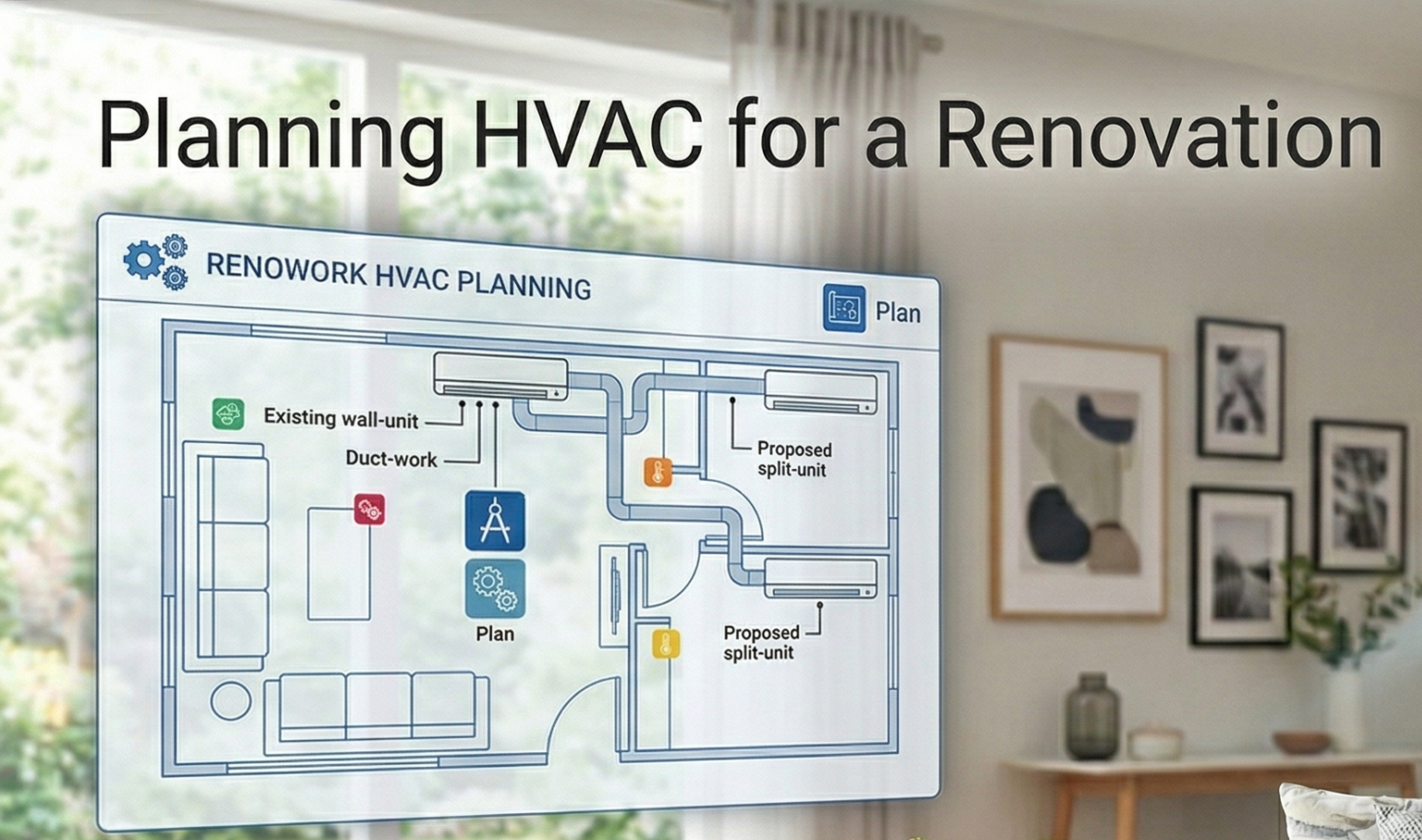
Home renovations and additions are exciting projects. Whether you’re expanding a kitchen in Bristol, finishing a basement in Warren, or adding a second story in Barrington, these updates are meant to improve comfort, functionality, and long-term value. Yet one of the most common — and costly — mistakes homeowners make is treating heating and cooling as an afterthought.
In Rhode Island homes, especially older ones, HVAC planning must happen early. Renovations change how a home uses energy, moves air, and holds heat. Without a thoughtful HVAC plan, even the most beautiful addition can end up too hot in summer, too cold in winter, or unnecessarily expensive to operate.
Superior Comfort works with homeowners across Rhode Island to design heating and cooling solutions that support renovations from the ground up. Here’s what every homeowner should know before construction begins.
Why HVAC Planning Is Critical During Renovations and Additions
When you renovate or add onto your home, you change its physical and thermal footprint. More space means more air to heat and cool. New layouts affect airflow. Large windows and higher ceilings change how heat moves through the house.
Common HVAC issues caused by poor renovation planning include:
- New rooms that never reach a comfortable temperature
- Existing systems running constantly and wearing out faster
- Uneven heating and cooling between old and new spaces
- Increased energy bills with no improvement in comfort
Once walls are closed and finishes are installed, fixing these problems becomes far more expensive. Planning HVAC early prevents comfort issues that can last for decades.
The Best Time to Address HVAC During a Renovation
HVAC planning should begin during the design phase — before permits are pulled and construction starts. Waiting until the project is nearly complete limits options and increases costs.
Early HVAC involvement allows for:
- Accurate system sizing based on final square footage
- Proper placement of equipment, ductwork, or indoor units
- Electrical planning for modern systems like heat pumps
- Coordination with builders and architects
In Rhode Island’s older housing stock, early planning is especially important because space constraints often require creative solutions.
How Renovations Change Your Home’s Heating and Cooling Load
Every renovation affects your home’s heating and cooling needs differently. A small addition may seem minor, but even modest changes can push an existing system beyond its limits.
Key factors that impact HVAC load include:
- Added square footage
- Ceiling height and open-concept designs
- Window size, orientation, and sun exposure
- Insulation upgrades or air sealing
- Changes in how rooms are used
A professional load calculation considers all of these factors. Guessing or relying on the original system size often leads to inefficient performance and discomfort.
Can Your Existing HVAC System Handle the New Space?
Many homeowners hope their current system can simply be extended to serve a new addition. In some cases, this works — but it’s far from guaranteed.
An existing system may be able to handle an addition if:
- The system is relatively new and oversized
- The addition is small and well-insulated
- Ductwork can be extended without airflow issues
However, many Rhode Island homes already have systems sized precisely for the original structure. Adding space without upgrading equipment often results in poor performance throughout the entire house.
HVAC Solutions That Work Well for Renovations
Ductless Mini-Split Systems
Ductless mini-splits are one of the most flexible HVAC options for renovations and additions. These systems use a heat pump connected to one or more indoor units.
They’re ideal because they:
- Require minimal structural changes
- Provide zoned comfort for individual rooms
- Work well in finished basements, attics, and additions
- Perform efficiently in New England winters
Ductless systems are especially popular in older homes where extending ductwork isn’t practical.
Extending or Modifying Existing Ductwork
In some renovations, extending ductwork makes sense — particularly when the existing system has sufficient capacity and ducts are accessible.
This approach works best when:
- The addition is close to existing duct runs
- Airflow can be properly balanced
- The system is upgraded if necessary
Without professional design, extended ductwork can lead to pressure problems and uneven temperatures.
High-Efficiency Heat Pump Systems
For larger renovations or whole-home updates, upgrading to a heat pump system can be a smart long-term investment.
Heat pumps offer:
- Both heating and cooling in one system
- Improved energy efficiency
- Compatibility with state and federal incentives
Cold-climate heat pumps are well-suited to Rhode Island’s winters when installed and sized correctly.
Electrical Planning: A Step Homeowners Often Miss
Modern HVAC systems rely heavily on electricity. During renovations, electrical capacity must be evaluated alongside heating and cooling plans.
Common electrical considerations include:
- Panel capacity and available breaker space
- Dedicated circuits for HVAC equipment
- Code compliance for new installations
In older Rhode Island homes, panel upgrades are often necessary to support heat pumps or additional equipment. Addressing this early prevents delays and unexpected expenses.
Ventilation and Indoor Air Quality After Renovation
Renovations often make homes tighter. New windows, insulation, and air sealing improve efficiency but can reduce natural ventilation.
Without proper planning, homeowners may notice:
- Increased humidity
- Stale indoor air
- Lingering odors or dust
HVAC planning should include ventilation strategies and indoor air quality solutions that maintain healthy airflow without sacrificing efficiency.
Special Considerations for Older Rhode Island Homes
Older homes present unique HVAC challenges during renovations:
- Limited wall cavities
- Irregular framing
- Existing boilers or radiator systems
In many cases, hybrid solutions work best. A boiler may continue heating the original home while ductless or heat pump systems serve new spaces. This approach preserves character while improving comfort.
Planning HVAC for Seasonal Comfort in New England
Rhode Island homes must handle:
- Cold winters
- Humid summers
- Rapid temperature swings in spring and fall
A well-planned HVAC system ensures the addition is comfortable year-round, not just during mild weather. Cooling loads are just as important as heating needs — especially in sunny additions or second-story spaces.
Budgeting Realistically for HVAC During a Renovation
HVAC is often underestimated in renovation budgets. Planning early allows homeowners to:
- Understand full system costs
- Compare long-term operating expenses
- Avoid rushed, last-minute decisions
While efficient systems may cost more upfront, they often reduce monthly energy bills and maintenance costs over time.
Common HVAC Mistakes Homeowners Make During Renovations
Avoiding these mistakes can save significant time and money:
- Waiting until construction is nearly complete
- Assuming the existing system has extra capacity
- Skipping professional load calculations
- Ignoring electrical requirements
- Choosing systems based on price alone
Professional planning prevents these issues before they become expensive problems.
How Professional HVAC Planning Protects Your Investment
Your renovation is a long-term investment. HVAC plays a major role in how comfortable and functional the space feels every day.
Well-designed systems:
- Improve comfort in both new and existing spaces
- Operate efficiently year-round
- Reduce wear on equipment
- Support future upgrades
Proper planning ensures your HVAC system enhances your renovation rather than limiting it.
Frequently Asked Questions About HVAC and Renovations
Should HVAC planning happen before or after permits?
Before. HVAC design often affects permit requirements and construction plans.
Can HVAC be added without major demolition?
Yes. Ductless and high-velocity systems can often be installed with minimal disruption.
Do renovations qualify for energy rebates?
Many HVAC upgrades, especially heat pumps, may qualify for incentives depending on system type and installation.
Building Comfort Into Your Renovation From the Start
A renovation should improve how your home lives — not create new comfort problems. Heating and cooling decisions deserve the same attention as layout, finishes, and design, especially in Rhode Island’s demanding climate.
By planning HVAC early and working with experienced professionals, homeowners can ensure their renovated spaces are comfortable, efficient, and built to last.
If you’re planning a home renovation or addition in Rhode Island, schedule your appointment with Superior Comfort for expert HVAC guidance you can trust.
Superior Comfort Specials
What Our Customers Say About Us
Anthony Brooks and Paul were amazing! They did everything in their power to be fair and give me what I wanted. Great customer service and would recommend.
Show More
Wilson Perez Jr
Very easy to work with. Doug was timely and thorough which I appreciated very much
Show More
Rosanna Thacke
David was wonderful.
Show More
Sandra Johnson
Technician was, really friendly and knowledgeable. Great experience.
Show More
RJ Wood
Thank you, Bill for your professionalism and time today as we continue to navigate our issues and decisions moving forward. I appreciate your patience and time listening to our concerns and questions. Keep up the great work.
Show More
John Ryan
We were having a problem with our air conditioner and we reached out this morning and the repair was completed by this afternoon. Our service tech Alex was so very helpful explaining exactly what was wrong and getting the repair done.
Show More
Dianna Lotito
Very professional and personable! Explained what he was doing very clearly!
Show More
John Lawlor
Patrick was timely and efficient. He explained what issues he saw with pictures and options for taking care of them. He got right to work on cleaning the condensers for us. It was a bit pricey compared to other states, but Superior had the best service contract in the area with the fastest service.
Show More
Rachel Mundell
Patrick, our technician, was polite, punctual and professional. He was quick to diagnose the problem and was able to return the same day with the necessary parts to fix our air conditioning. He did an excellent job!
Show More
Linda D
We had a great experience with Gerkin Bibieca from superior comfory today. He was prompt, professional, and friendly, answered all our questions, explained everything clearly, and provided a detailed quote without any pressure. We signed up for the membership because it offered great value. After another HVAC company rescheduled and failed to show up, it was a relief to work with someone reliable, knowledgeable, and efficient. We were very impressed and highly recommend him and superior comfort!
Show More
Meredith Weiss
Mike was extremely professional and patient with all my questions. He thoroughly explained all my options and fixed my issues promptly.
Show More
Kaxxxie
This is our first time using this company. They are professional company with great communication. The technician Gerkin was courteous and knowledgeable. We will be using their services again!
Show More
Donna Lapointe
Patrick was professional and courteous.
Show More
laurent bissonnette
Quick service. Very good service technician. Giovanni would be again welcomed in our home. Very thorough inspection of our HVAC.
Show More
Ralph Manzi
Kyle’s thorough attention to detail and exceptional workmanship are truly appreciated. His hard work, professionalism, and dedication to ensuring customer satisfaction are outstanding. He goes above and beyond to deliver quality results, making the entire experience smooth and reassuring. It’s clear he takes great pride in his work, and it shows in every aspect of the job. Highly recommended!
Show More
stacey aubin

FLEXIBLE FINANCING OPTIONS
Get the comfort you need without the upfront cost. We offer easy and affordable payment plans to fit your budget.