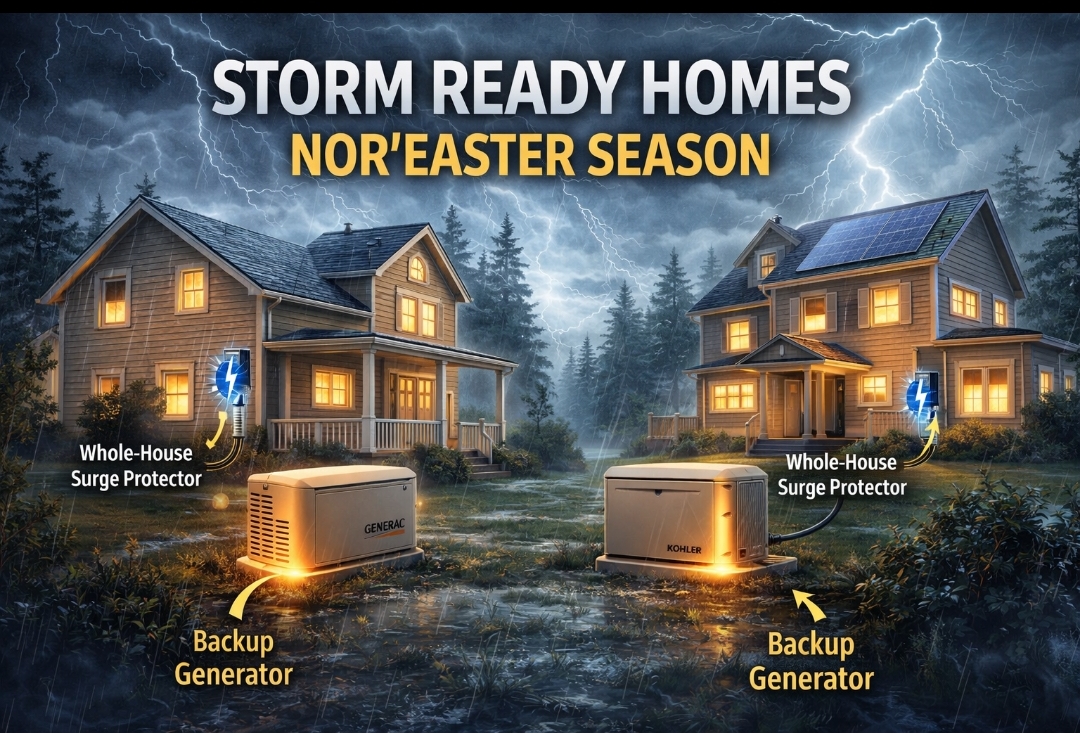
Nor’easters are a fact of life in Rhode Island and Southern Massachusetts. These powerful coastal storms bring heavy rain, wet snow, high winds, and widespread power outages that can last for hours — or days. For homeowners in Bristol, Warren, Barrington, Portsmouth, Tiverton, and nearby coastal communities, storm season isn’t just an inconvenience. It’s a real test of how prepared a home truly is.
When the power goes out, the impacts are immediate. Heating systems shut down, sump pumps stop working, refrigerators warm up, and sensitive electronics are left vulnerable when power is restored. Preparing your home before the next storm arrives is the difference between riding out an outage comfortably and dealing with avoidable damage and stress.
Superior Comfort helps Rhode Island homeowners strengthen their homes against Nor’easter season with generator and surge protection solutions designed for real coastal conditions. Here’s what you should know about making your home storm-ready — and why planning ahead matters.
Why Nor’easters Pose a Serious Risk to Homes
Unlike fast-moving summer storms, Nor’easters can linger for days. Their combination of wind, precipitation, and saturated ground puts enormous strain on power infrastructure.
Common Nor’easter-related issues include:
- Extended power outages
- Downed trees and power lines
- Flooded basements and crawl spaces
- Power surges when electricity is restored
For coastal and low-lying areas, outages often last longer due to difficult access for repair crews and weather conditions that prevent quick restoration.
What Happens to a Home During a Power Outage
When electricity is lost, many critical home systems stop functioning immediately.
Power outages can affect:
- Heating systems and boilers
- Heat pumps and furnaces
- Sump pumps and drainage systems
- Refrigerators and freezers
- Medical equipment and home offices
In winter storms, loss of heat can quickly turn from uncomfortable to unsafe, especially for older adults, children, and pets.
Why Backup Power Is No Longer a Luxury
Years ago, generators were considered optional upgrades. Today, they’re increasingly seen as essential home protection — especially in coastal New England.
Homeowners are rethinking backup power because:
- Storms are more frequent and intense
- Homes rely more heavily on electricity
- Outages last longer than they used to
Backup power isn’t about convenience alone. It’s about safety, home protection, and peace of mind.
Understanding Home Generator Options
Not all generators provide the same level of protection. Choosing the right system depends on how much of your home you want to power during an outage.
Portable Generators
Portable generators are smaller units that can power limited appliances when connected properly.
They typically:
- Require manual setup
- Power only selected circuits
- Use gasoline or propane
While useful for short outages, they require hands-on operation and careful safety planning.
Standby Whole-Home Generators
Standby generators are permanently installed systems that activate automatically when power is lost.
They offer:
- Automatic startup within seconds
- Power for essential systems or the entire home
- Connection to natural gas or propane
For many Rhode Island homeowners, standby generators provide the most reliable protection during Nor’easter season.
What Can a Standby Generator Power?
A properly sized standby generator can support:
- Heating systems and boilers
- Refrigeration and food storage
- Lighting and outlets
- Sump pumps and drainage
- Internet and communication devices
Some systems are designed to power the entire home, while others focus on critical circuits.
Generator Sizing: Why One Size Does Not Fit All
Choosing the right generator size is critical. An undersized generator may overload and fail, while an oversized system increases cost unnecessarily.
Proper sizing considers:
- Square footage of the home
- Heating and cooling equipment
- Electrical panel capacity
- Lifestyle needs during outages
Professional evaluation ensures the generator can handle real-world demand without stress.
Electrical Panel and Wiring Considerations
Many older Rhode Island homes were not designed with backup power in mind. Generator installation often requires electrical upgrades.
Common electrical considerations include:
- Transfer switch installation
- Panel upgrades or reconfiguration
- Dedicated circuits for critical systems
Proper electrical integration ensures safe operation and code compliance.
Why Surge Protection Is Just as Important as Backup Power
When power is restored after an outage, voltage spikes are common. These surges can damage sensitive electronics and appliances instantly.
Surge protection is essential because:
- Power restoration often causes spikes
- Modern homes contain expensive electronics
- Damage may not be immediately visible
Surge protection acts as a shield for your home’s electrical system.
Whole-Home Surge Protection: How It Works
Whole-home surge protectors are installed at the electrical panel and protect all circuits simultaneously.
They help safeguard:
- HVAC systems
- Appliances
- Smart home devices
- Computers and entertainment systems
Unlike plug-in surge strips, whole-home systems provide comprehensive protection.
Why Coastal Homes Face Higher Surge Risks
Coastal areas experience:
- More frequent outages
- Greater exposure to wind-related grid damage
- Longer restoration timelines
Each outage increases the risk of damaging surges when power returns.
Protecting HVAC and Plumbing Systems During Storms
Storm preparedness goes beyond electricity alone.
Power outages can impact:
- Boilers and furnaces
- Heat pumps
- Well pumps
- Sump pumps
Without backup power, these systems may fail at the worst possible time, leading to frozen pipes or flooding.
Sump Pumps and Flood Prevention During Nor’easters
Basement flooding is a major concern during coastal storms. Heavy rain combined with power loss can overwhelm drainage systems.
Backup power helps ensure:
- Sump pumps continue operating
- Basements stay dry
- Structural damage is prevented
Some homeowners also choose battery backups for added protection.
Fuel Considerations for Generators
Generator fuel choice affects reliability and convenience.
Common fuel options include:
- Natural gas
- Propane
Permanent fuel connections eliminate the need for refueling during storms, which can be difficult or unsafe.
Maintenance and Reliability of Backup Systems
Backup systems must be ready when storms hit. Regular maintenance is essential.
Professional service includes:
- Routine testing
- Battery checks
- Electrical inspections
Standby generators are designed to self-test, but periodic professional inspection ensures long-term reliability.
Storm Preparation for Older and Historic Homes
Many historic homes in Rhode Island face additional challenges:
- Older electrical panels
- Limited grounding
- Higher sensitivity to surges
Thoughtful upgrades allow storm protection without altering the home’s character.
Common Mistakes Homeowners Make With Storm Preparation
Avoiding these mistakes improves safety and performance:
- Waiting until after a storm to plan upgrades
- Relying solely on portable generators
- Skipping surge protection
- Underestimating electrical needs
Preparation is far more effective than reaction.
Planning Generator and Surge Protection Together
Generators and surge protection work best as a coordinated system.
Together, they:
- Keep power running during outages
- Protect systems when power returns
- Reduce long-term repair costs
Integrated planning ensures seamless protection.
How Professional Installation Protects Your Home
Improper generator or surge installation can create safety hazards.
Professional installation ensures:
- Code compliance
- Safe electrical integration
- Proper grounding and ventilation
Experience matters when protecting a home’s electrical infrastructure.
Frequently Asked Questions About Storm-Ready Homes
Will a generator increase home value?
Backup power is often attractive to buyers in storm-prone areas.
Do generators run automatically?
Standby systems activate automatically when power is lost.
Is surge protection really necessary?
Yes. Many electronics are damaged when power is restored, not when it goes out.
Preparing Before the Next Nor’easter Arrives
Storms are unpredictable, but preparation doesn’t have to be. Generator and surge protection upgrades give homeowners control during uncertain conditions, keeping homes safe, comfortable, and functional when the grid fails.
For Rhode Island and Southern Massachusetts homeowners, storm readiness is no longer optional — it’s a practical investment in safety and peace of mind.
If you want to make your home storm-ready before the next Nor’easter hits, schedule your appointment with Superior Comfort for expert generator and electrical protection guidance you can trust.
Superior Comfort Specials
What Our Customers Say About Us
I called Superior for a leak. Mark showed up on time and wore the shoe covers. Mark was exceptional and professional and I am very grateful for his professionalism and work ethic. He had to dig to find the leak and he got wet in the process and acted like it was nothing. * One thing I am not a fan of is the AI customer service. That is no knock on Mark whatsoever. I just hate it when I call and I realize there will be no human. I would use Superior again and hope Mark is the contractor who shows up to do the work. Thank you.
Show More
Robert Stewart
These young men were kind ca and made me feel like they cared. Woul highly recommend this company.
Show More
mary scipione
Great customer service!!!! William explained all the work as he performed it and worked to get the job done in a timely manner. We are grateful that he was able to come within hours of calling for help from Superior Comfort. A hard worker and a very personable individual, thanks William!
Show More
Rich Coe Newport
I’m very happy with the price I paid and the service I received. Keegan did an excellent job servicing my furnace. I’m very happy with my decision to call you guys. I’m Looking forward to having my old furnace replaced in the next couple of days.
Show More
John O'Dell
Had Gee from superior comfort to work on my furnace and he did a really great job. Very nice guy. Would recommend this service.
Show More
Henara Yan
I had the pleasure of working with Gee today. He was so personable, knowledgeable, quick and efficient. It was a very positive experience. I will definitely be using Superior Comfort’s services again and asking for Gee.
Show More
Kristin Tanasio
Tech came quickly and identified the issue and solved it quickly
Show More
Karen Cordeiro
Very professional. He knows what he is doing. Will use them again.
Show More
Laurie Keenan
I called superior for the first time and Bryce Weaver and Justin came to my home to evaluated an issue with my tub! Bryce was excellent he gave me a quote to replace my damaged tub and shower but he gave me options. He was pushy he just was very thorough and he let me decide without pressure! We would definitely recommend him and the Company!
Show More
Deb Spencer
Outstanding service!!!
Show More
vicky wiseman
William Putnam was really on point, laid everything out as simple as he could and was a pleasure to work with.
Show More
Francisco Rodriguez
Great service, very good guy, friendly, professional and knowledgeable!
Show More
Patti Patterson
Austin and Charles were amazing! Recommend to anyone
Show More
Mollie Diesing
Patrick was excellent. He is very knowledgeable and kind.
Show More
Jill Jeter
Austin (Plumber) and Anthony (Electrician) did a great job installing my sump pump and the dedicated GFI outlet. They were incredibly friendly and easy to work with. The communication throughout the entire project was great. They were both beyond responsive with getting out to the house to evaluate the site and getting the job started. Really appreciate all the help guys! Happy to join the Superior team for all of our HVAC, Plumbing and Electrical needs going forward!
Show More
Ryan MacKenzie
FLEXIBLE FINANCING OPTIONS
Get the comfort you need without the upfront cost. We offer easy and affordable payment plans to fit your budget.