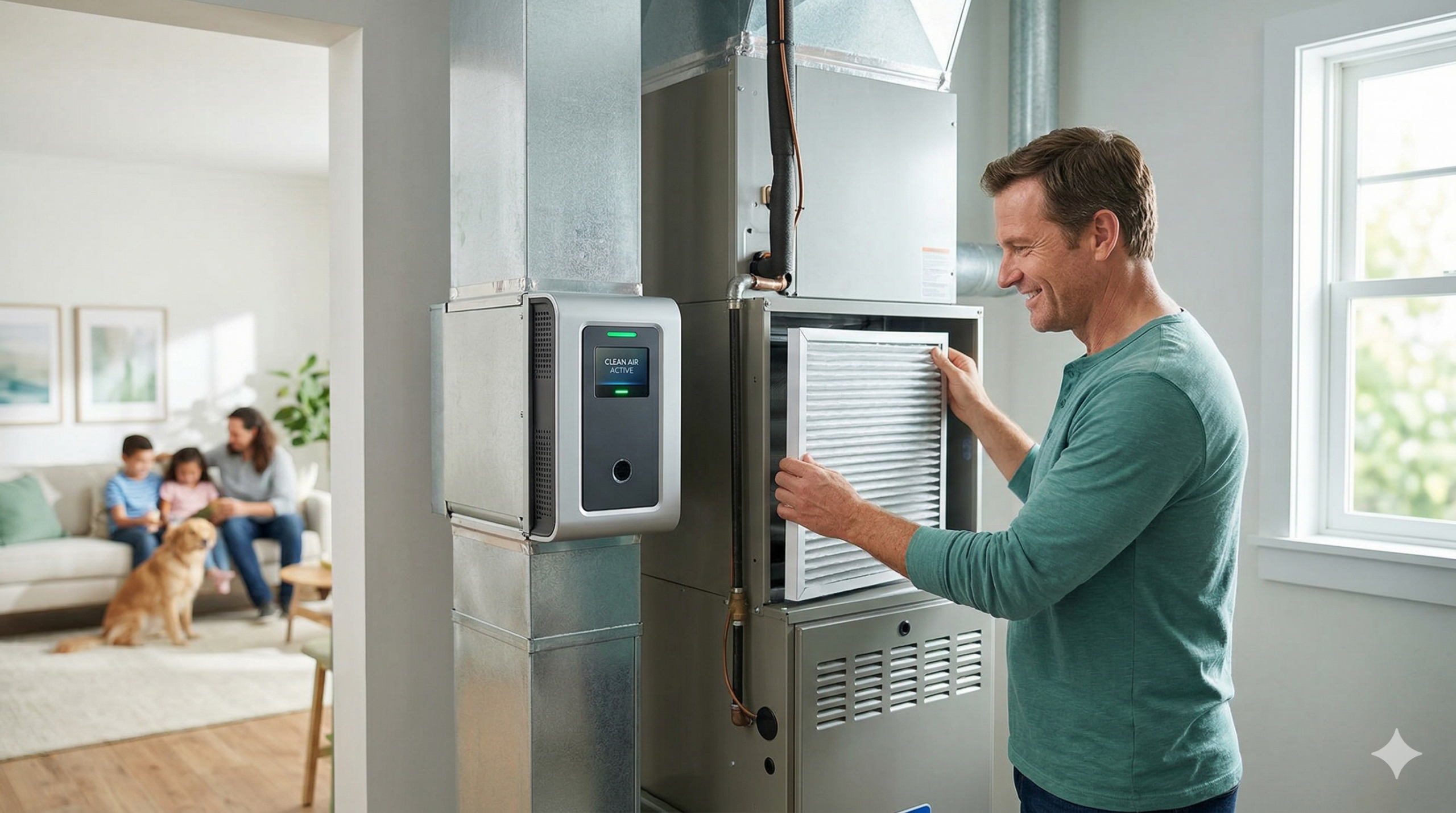
Indoor air quality has become a major concern for homeowners across Rhode Island — and for good reason. Between older homes, humid coastal air, and tightly sealed renovations, the air inside your home can often be more polluted than the air outside. Dust, allergens, moisture, and airborne particles build up quietly, affecting comfort, health, and even the performance of your HVAC system.
Many homeowners want better indoor air quality but feel overwhelmed by options. Air purifiers, filters, UV lights, humidity controls — some work well, others offer limited benefit, and a few are simply unnecessary for most homes.
Superior Comfort helps homeowners throughout Bristol, Warren, Barrington, Portsmouth, Tiverton, and the greater Rhode Island area improve indoor air quality using proven solutions that integrate with existing HVAC systems. This guide explains which upgrades actually work, how they fit into real homes, and how to choose improvements that deliver lasting results.
Why Indoor Air Quality Is a Growing Issue in Rhode Island Homes
Indoor air quality problems aren’t limited to new construction or older houses — they affect nearly every home in New England.
Common contributors include:
- Coastal humidity that encourages mold and mildew
- Older homes with limited ventilation
- Renovations that tighten building envelopes
- Dust and allergens trapped in ductwork
- Seasonal pollen and outdoor air infiltration
Because most people spend the majority of their time indoors, poor air quality can quietly impact comfort, sleep, and overall well-being.
What Poor Indoor Air Quality Looks Like in Real Homes
Indoor air quality issues don’t always present dramatic symptoms. Often, the signs are subtle and easy to dismiss.
Homeowners may notice:
- Persistent dust buildup
- Musty or stale odors
- Allergy symptoms that worsen indoors
- Uneven humidity levels
- Frequent respiratory irritation
These symptoms are often treated individually, but they usually point to a larger air quality imbalance.
Why “One-Size-Fits-All” IAQ Solutions Rarely Work
Not every home needs the same air quality upgrades. A solution that works well in one house may offer little benefit in another.
Factors that affect indoor air quality include:
- Home age and construction style
- Existing HVAC system type
- Humidity levels
- Family health concerns
- Presence of pets or smokers
That’s why the most effective IAQ upgrades are those tailored to your home and integrated into your existing HVAC system.
High-Efficiency Air Filtration: The Foundation of Cleaner Air
Upgrading air filtration is often the first and most impactful step toward better indoor air quality.
How Enhanced Filtration Works
Your HVAC system already filters air as it circulates. Standard filters primarily protect equipment, not indoor air quality. High-efficiency filters capture much smaller particles.
Improved filtration can remove:
- Dust and pollen
- Pet dander
- Mold spores
- Airborne debris
For many Rhode Island homes, this upgrade alone significantly reduces allergy symptoms and visible dust.
Humidity Control: One of the Most Overlooked IAQ Upgrades
Humidity plays a major role in indoor air quality. Too much moisture encourages mold growth, while air that’s too dry can irritate airways and damage wood finishes.
Whole-home humidity solutions help:
- Prevent mold and mildew
- Improve comfort year-round
- Support healthier breathing
- Protect flooring, furniture, and trim
In coastal New England, proper humidity control is often essential — not optional.
Whole-Home Dehumidifiers and IAQ Improvement
Whole-home dehumidifiers integrate directly with HVAC systems to remove excess moisture throughout the house. Unlike portable units, they operate automatically and consistently.
Benefits include:
- Balanced humidity in every room
- Reduced musty odors
- Improved air quality and comfort
- Less strain on cooling systems
For homes with basements, crawl spaces, or coastal exposure, this upgrade can make a noticeable difference.
UV Air Purification: When It Makes Sense
Ultraviolet (UV) air purification systems are designed to neutralize biological contaminants such as bacteria and mold.
These systems:
- Install inside HVAC equipment
- Target microbial growth on coils and surfaces
- Help prevent mold buildup within the system
UV purification is especially useful in homes with:
- Recurring mold issues
- High humidity
- Allergy-sensitive occupants
While not necessary for every home, UV systems can be a valuable supplement when used appropriately.
Ventilation Solutions for Tighter Homes
Many Rhode Island homes have been upgraded with new windows, insulation, and air sealing. While this improves energy efficiency, it can reduce fresh air exchange.
Poor ventilation can lead to:
- Stale indoor air
- Increased pollutant concentration
- Lingering odors
Ventilation upgrades introduce controlled amounts of fresh air without sacrificing efficiency. This helps dilute indoor pollutants and maintain healthier air circulation.
Ductwork Improvements and Air Quality
Ductwork plays a major role in air quality, especially in older homes.
Common duct-related issues include:
- Dust and debris buildup
- Leaks pulling in contaminants
- Inconsistent airflow
Sealing and improving duct systems helps ensure clean, filtered air reaches living spaces while reducing energy loss.
How IAQ Upgrades Support Heating and Cooling Performance
Indoor air quality upgrades don’t just improve health — they also support HVAC performance.
Benefits include:
- Improved airflow
- Reduced system strain
- Better temperature consistency
- Increased system lifespan
Cleaner air allows HVAC systems to operate more efficiently and reliably throughout the year.
Electrical Considerations for IAQ Systems
Many IAQ upgrades rely on electrical components, including fans, sensors, and controls.
Proper installation may require:
- Dedicated circuits
- Control integration with thermostats
- Electrical safety checks
Having HVAC and electrical expertise under one roof helps ensure upgrades are installed safely and correctly.
Common IAQ Myths That Lead Homeowners Astray
“Opening windows improves air quality.”
In humid or high-pollen conditions, open windows can worsen indoor air quality.
“Portable air purifiers are enough.”
Room units help locally but don’t address whole-home air circulation.
“All air filters are the same.”
Filter quality and compatibility vary widely and affect results.
Understanding these myths helps homeowners make informed decisions.
How to Know Which IAQ Upgrades Your Home Actually Needs
The most effective approach starts with evaluating your home’s specific conditions.
Questions to consider include:
- Are humidity levels consistent year-round?
- Do allergy symptoms improve outside the home?
- Is dust buildup excessive?
- Are odors persistent?
Professional assessment helps match solutions to real needs rather than guesswork.
Indoor Air Quality in Older Rhode Island Homes
Older homes often face additional challenges:
- Limited ventilation
- Older duct systems
- Basements prone to moisture
Targeted upgrades allow homeowners to improve air quality without major renovations or system replacements.
Maintenance Matters for Long-Term Air Quality
IAQ upgrades perform best when properly maintained.
Maintenance may include:
- Filter replacements
- System inspections
- Humidity level checks
Routine care ensures consistent performance and long-term benefits.
Frequently Asked Questions About Indoor Air Quality Upgrades
Do IAQ upgrades require replacing my HVAC system?
Most upgrades integrate with existing systems.
Are these upgrades noticeable right away?
Many homeowners notice improvements quickly, especially with humidity and filtration.
Do IAQ upgrades increase energy use?
When properly designed, many upgrades improve overall efficiency.
Building a Healthier Home With the Right Air Quality Solutions
Indoor air quality affects every part of daily life — from comfort and sleep to long-term health and home durability. The most effective improvements aren’t flashy gadgets, but well-designed upgrades that work seamlessly with your existing HVAC system.
By focusing on proven solutions like filtration, humidity control, ventilation, and targeted purification, homeowners can create cleaner, healthier living environments without unnecessary complexity.
A Clear Path to Cleaner Air and Greater Peace of Mind
Better indoor air quality doesn’t require a complete system overhaul. It requires thoughtful upgrades tailored to your home, your HVAC system, and your lifestyle. With the right approach, Rhode Island homeowners can enjoy healthier air, improved comfort, and greater confidence in the systems that support their home.
If you’re ready to improve the air quality in your Rhode Island home, schedule your appointment with Superior Comfort and get expert guidance you can trust.ntment with Superior Comfort and get expert help creating a healthier, more comfortable living environment.ent with Superior Comfort and keep your AC system running at its best.
Superior Comfort Specials
What Our Customers Say About Us
Anthony Brooks and Paul were amazing! They did everything in their power to be fair and give me what I wanted. Great customer service and would recommend.
Show More
Wilson Perez Jr
Very easy to work with. Doug was timely and thorough which I appreciated very much
Show More
Rosanna Thacke
David was wonderful.
Show More
Sandra Johnson
Technician was, really friendly and knowledgeable. Great experience.
Show More
RJ Wood
Thank you, Bill for your professionalism and time today as we continue to navigate our issues and decisions moving forward. I appreciate your patience and time listening to our concerns and questions. Keep up the great work.
Show More
John Ryan
We were having a problem with our air conditioner and we reached out this morning and the repair was completed by this afternoon. Our service tech Alex was so very helpful explaining exactly what was wrong and getting the repair done.
Show More
Dianna Lotito
Very professional and personable! Explained what he was doing very clearly!
Show More
John Lawlor
Patrick was timely and efficient. He explained what issues he saw with pictures and options for taking care of them. He got right to work on cleaning the condensers for us. It was a bit pricey compared to other states, but Superior had the best service contract in the area with the fastest service.
Show More
Rachel Mundell
Patrick, our technician, was polite, punctual and professional. He was quick to diagnose the problem and was able to return the same day with the necessary parts to fix our air conditioning. He did an excellent job!
Show More
Linda D
We had a great experience with Gerkin Bibieca from superior comfory today. He was prompt, professional, and friendly, answered all our questions, explained everything clearly, and provided a detailed quote without any pressure. We signed up for the membership because it offered great value. After another HVAC company rescheduled and failed to show up, it was a relief to work with someone reliable, knowledgeable, and efficient. We were very impressed and highly recommend him and superior comfort!
Show More
Meredith Weiss
Mike was extremely professional and patient with all my questions. He thoroughly explained all my options and fixed my issues promptly.
Show More
Kaxxxie
This is our first time using this company. They are professional company with great communication. The technician Gerkin was courteous and knowledgeable. We will be using their services again!
Show More
Donna Lapointe
Patrick was professional and courteous.
Show More
laurent bissonnette
Quick service. Very good service technician. Giovanni would be again welcomed in our home. Very thorough inspection of our HVAC.
Show More
Ralph Manzi
Kyle’s thorough attention to detail and exceptional workmanship are truly appreciated. His hard work, professionalism, and dedication to ensuring customer satisfaction are outstanding. He goes above and beyond to deliver quality results, making the entire experience smooth and reassuring. It’s clear he takes great pride in his work, and it shows in every aspect of the job. Highly recommended!
Show More
stacey aubin

FLEXIBLE FINANCING OPTIONS
Get the comfort you need without the upfront cost. We offer easy and affordable payment plans to fit your budget.