Drywell Installation in Rhode Island
Stop pooling water and downspout runoff with a professionally installed drywell.
Superior Comfort is proud to serve Rhode Island homeowners with reliable heating, cooling, plumbing, and electrical services focused on your home’s comfort and safety. When rain runs off your roof and pools against the foundation, or a downspout floods the same patch of lawn every storm, a drywell can send that water safely underground. Superior Comfort installs drywells for homeowners in Bristol, Warren, Barrington, Portsmouth, Tiverton, and across Rhode Island.
What Is a Drywell?
A drywell is an underground chamber or stone-filled pit that collects stormwater runoff and lets it soak slowly into the surrounding soil. Water from roof gutters, downspouts, or yard drains flows through a pipe into the drywell. The water is held there briefly, then absorbed into the ground instead of running across the surface.
A drywell is not a septic system and it is not meant for household wastewater. It is designed only for clean stormwater runoff.
What Drainage Problems Does a Drywell Solve?
A drywell can help when runoff has nowhere good to go. Common problems include:
- Water pooling near the foundation after rain
- Downspouts that dump water onto the lawn or driveway
- Eroded soil or washed-out landscaping beneath downspouts
- Soggy yard areas that stay wet for days
- Icy patches on walkways in winter where downspout water spills out and freezes
- Runoff flowing toward a neighbor’s property or the street
Moving water away from the foundation also helps protect your home. Persistent water against a foundation wall is a common contributor to basement dampness. A drywell is one tool for managing it, though it is not a cure-all for every wet basement.
How Do You Know If You Need a Drywell?
These signs suggest your property could benefit from one:
- Puddles form in the same spots after every heavy rain
- You see a gutter or downspout overflowing at the discharge point
- Water collects along the foundation wall
- The soil beneath your downspouts is eroded or bare
- Your yard is slow to dry out after storms
A site evaluation tells us whether a drywell is the best fit or whether another solution, such as regrading or a different drain approach, would work better. Book a drywell site evaluation with Superior Comfort and we will recommend the fix that actually suits your property.
Why Do Rhode Island Properties Have Runoff Problems?
Rhode Island gets plenty of rain, and coastal storms can drop a lot of water quickly. Roofs, driveways, and patios shed that water fast, and it needs somewhere to go.
Soils vary widely across the state, from sandy coastal soil that drains quickly to dense glacial till that drains slowly. Near the water, a high groundwater table can limit how much a site can absorb. Winter freeze-thaw cycles also affect how the ground handles runoff. These differences are why drywell placement and sizing need a real site evaluation, not a one-size-fits-all approach.
What Does the Drywell Installation Process Look Like?
Here is how a Superior Comfort drywell installation typically works:
- Site evaluation: We look at where the water comes from, where it collects, the slope of the property, and the soil conditions to decide whether a drywell fits and where it should go.
- Placement and setbacks: We choose a location that keeps the drywell a safe distance from the foundation, septic components, wells, and property lines.
- Utility mark-out: Underground utilities must be located before anyone digs. Calling 811 is required before excavation.
- Permits and approvals: We check what local requirements apply to your property before work begins.
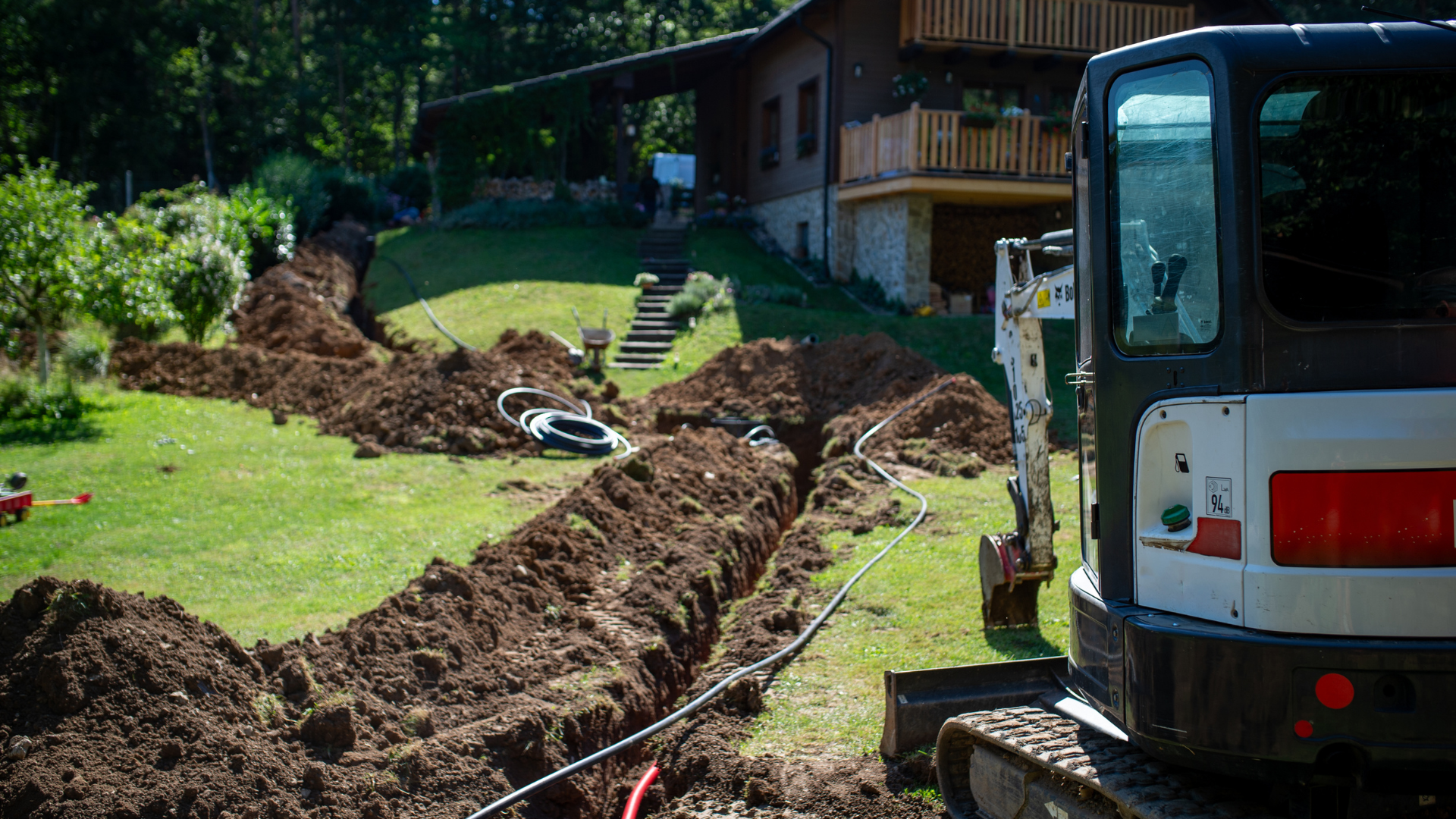
- Excavation and installation: We dig the pit and install the drywell chamber or stone-filled basin, wrapped in filter fabric to keep soil out.
- Piping connection: We connect your downspouts or drain lines to the drywell with properly sloped pipe.
- Backfill and restoration: We backfill the excavation and restore the area as closely as we can.
- Testing: We run water through the system to confirm it flows correctly.
Do You Need a Permit to Install a Drywell in Rhode Island?
Possibly. In Rhode Island, drywells are regulated as groundwater discharge systems under state environmental rules. Typical single-family roof runoff projects are generally small enough that state registration is not required, but larger projects and those handling paved-area runoff may be treated differently.
Local rules also matter. Your town’s building, zoning, or conservation requirements may apply, and properties near wetlands or the coast can have extra restrictions. We confirm what applies to your property before installing, so you are not surprised later.
Why Do Rhode Island Homeowners Choose Superior Comfort for Drywell Installation?
Site-Specific Design
We evaluate your property’s runoff, soil, and layout instead of installing a standard unit in a standard spot.
Licensed and Insured
Superior Comfort is fully licensed and insured in Rhode Island.
Honest Recommendations
If a drywell is not the best answer for your drainage problem, we will tell you. Our goal is the solution that actually works for your property.
Locally Owned and Trusted
Superior Comfort is a family-owned Rhode Island business with deep roots in the community. We stand behind our work.
Related Drain Services
- → Back to all drain services in Rhode Island
- → Sewer camera inspection to check buried drain lines
- → Backup sump pump installation for basements that take on water
- → Leak detection when the water source is inside the home
Frequently Asked Questions About Drywell Installation in Rhode Island
Where does the water go once it enters a drywell?
Runoff from your gutters or yard drains flows through a pipe into an underground chamber or stone-filled pit. The water collects inside and slowly soaks into the surrounding soil. This keeps the water from pooling on the surface or running toward your foundation.
How big does a drywell need to be?
Size depends on how much roof or paved area drains into it and how quickly your soil absorbs water. Sandy soil drains faster than dense till, so a site with slower soil needs more storage. We size the system based on your property, not a guess.
How long does a drywell last?
A properly sized and installed drywell can last for many years. Its lifespan depends on soil conditions and on keeping sediment and debris out of the system. Gutter guards and regular gutter cleaning help protect it.
Does a drywell need maintenance?
Drywells need little maintenance, but they are not maintenance-free. Keep gutters clear so leaves and grit do not wash in, and watch for signs that water is no longer draining after storms. If it starts backing up, have the lines checked with a drain line camera inspection.
Can a drywell fix a wet basement?
It can help when the cause is roof or surface runoff collecting near the foundation. It will not solve every wet basement. Groundwater seepage, foundation cracks, and plumbing leaks call for different fixes. We will help you figure out the cause before recommending a solution.
Schedule a Drywell Consultation With Superior Comfort
If water keeps collecting around your home, Rhode Island families trust Superior Comfort for honest advice and professional installation that manages runoff the right way.
Call Superior Comfort today for reliable home service you can trust. Need heating, cooling, or plumbing help? Contact our Rhode Island team now.
Schedule a drywell site evaluation online with Superior Comfort. We’re here when you need us most.
Superior Comfort Specials
What Our Customers Say About Us
Bryce was very customer friendly and a pleasure to work with. He was professional, knowledgeable and even made sure to cover his shoes. He offered advice without pressure and we signed up for the yearly membership program to trust Superior with full house coverage. Thanks Bryce!
Show More
C Knight
Great experience! Bryce was quick, professional and did a great job fixing the issue. Superior comfort was easy to work with, reasonably priced and got everything taken care of. Would definitely recommend and use again!
Show More
Rachel Braun
Gerkin tremendously helped us out during an inspection today, and gave great information to help us make the right decision.
Show More
Adam Pace
Alex did a thorough inspection of our HVAC system and troubleshooting our hot air vent system. We are well pleased with the service and the quote for a new system and ductwork.
Show More
Carolyn Picano
Thank you so much. For fixing my water filter issue. Its nice to have clean water again.
Show More
Christine
Excellent service Speedy, knowledgeable, personable Most appreciated
Show More
Dave Carlin
Excellent service from start to finish. Professional, punctual, knowledgeable, and courteous.
Show More
Denis Duquette
I used this company to assess some plumbing issues and Austin D. Assisted. He was timely, professional and personable. I would highly recommend using them for any home issue.
Show More
Anthony Amaral
Great customer service and everything was well explained. We worked with Bill and Ben and they were both great!
Show More
Emma Nason
Giovanni was very personable, seemed trustworthy and explained things to help me figure out what was wrong and what my options are
Show More
Frank Palma
Everything with Superior was superior – easy, timely, and done with the utmost attention to the customer. Bryce arrived at my home within 4 hours of me first contacting Superior to scope out my hot water heater issues. The work was performed the following morning by Austin and his colleague and everything was done to perfection!
Show More
Christopher Lynch
On time, polite. Great job!
Show More
Denise Martin
Professional, fast and got the job done right. Made sure to test everything and asked if I had any questions before leaving. Highly recommend.
Show More
steve costa
William did a wonderful job
Show More
Explore Knitting Tours
Jayden was very professional knowledgeable and friendly during the plumbing and safety inspection!
Show More
Lisa Gavrillen
FLEXIBLE FINANCING OPTIONS
Get the comfort you need without the upfront cost. We offer easy and affordable payment plans to fit your budget.